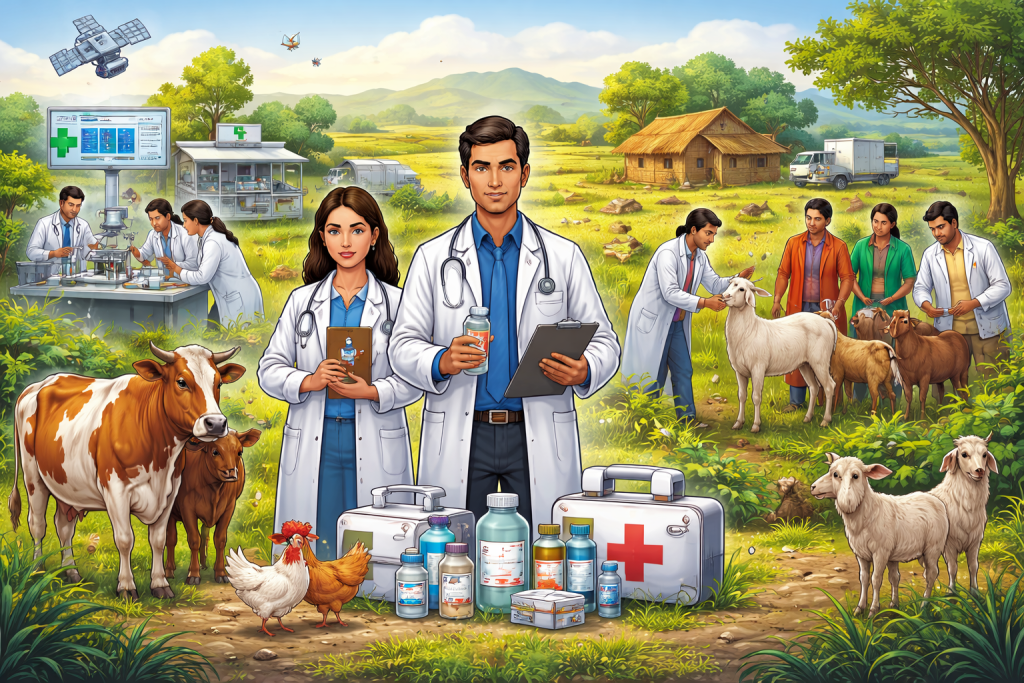

<p><span style="font-weight: 400">Healthy animals are necessary for supporting farming families and rural development in the country. A </span>veterinary medicine company in India<span style="font-weight: 400"> assists in the development of the country by creating medicines, vaccines, and solutions for animals. These companies help the farming families by providing them with options for treatment. This also improves animal health systems and promotes regular disease prevention habits in rural and developing areas. </span></p>
<h2>Key Contributions of Veterinary Medicine Companies in Advancing Animal Disease Prevention in India</h2>
<ul>
<li><b>Early Disease Monitoring Systems: </b><span style="font-weight: 400">Today, veterinary networks are able to share field information, which shows how diseases are changing in animals. Research groups from a <a href="https://www.petvethealthcare.in/best-pcd-veterinary-franchise-company/"><strong>veterinary medicine company</strong></a> study animal samples, seasonal outbreaks, and regional farming styles. This ongoing research provides early alerts for veterinarians and farmers. This early awareness enables vaccination and nutrition campaigns that keep cattle active and healthy in different agricultural environments.</span></li>
<li><b>Vaccine Development Progress: </b><span style="font-weight: 400">New vaccine developments are helping cattle, poultry, sheep, and pet animals overcome common infections. Researchers are using regional climate, farming, and animal immunity information to develop useful vaccines for farmers. Production centres are involved in quality, testing, storage, safety, and distribution planning for these vaccines, which are then made available in different places where veterinarians are helping farmers with immunization campaigns for strong animal health.</span></li>
<li><b>Veterinary Training and Field Support: </b><span style="font-weight: 400">Field education programs assist livestock owners in acquiring knowledge on hygiene, nutrition, and awareness of the onset of symptoms. Training camps are organized to impart knowledge to rural markets through the association of veterinary colleges and distributors. Medicines and vaccines are transported quickly to rural areas through a</span> veterinary medicine franchise<span style="font-weight: 400"> network. Rural entrepreneurs are involved in the supply chain to enhance the availability of preventive care services to dairy farming, poultry farming, and goat farming communities. </span></li>
<li><b>Stronger Livestock Immunity Programs: </b><span style="font-weight: 400">Animal immunity can be achieved through a combination of vaccination, nutrition, and hygiene. Research groups associated with veterinary clinics provide information to dairy farming communities, poultry farming communities, and rural clinics on the importance of regular care. Such programs can reduce the risk of sudden illnesses occurring among animals. This can promote a stable supply of milk, meat products, and eggs.</span></li>
<li><b>Quality Manufacturing: </b><span style="font-weight: 400">Manufacturing processes ensure the purity of <a href="https://haznos.org/2026/why-trust-matters-the-real-power-behind-quality-veterinary-medicines/" target="_blank" rel="noopener">veterinary medicines</a>. The production plants are designed with controlled environments, lab tests, and storage systems. Reliable distribution systems ensure the movement of the products from the production plants to the distributors, clinics, and farm service centres. This ensures that animals are provided with timely preventive care, which maintains the vitality of the animal population.</span></li>
<li><b>Expanding Rural Veterinary Access: </b><span style="font-weight: 400">Increasing animal health care requirements create the opportunity for the expansion of veterinary medicine distribution in the developing animal farming areas. The distribution network, clinics, and cooperatives improve the supply routes for reaching the animal populations, even in the remote animal belts. The veterinary franchise system empowers entrepreneurs with training to distribute animal vaccines, supplements, and treatment information. </span></li>
</ul>
<p><span style="font-weight: 400">In conclusion, well-developed prevention systems ensure that animals are healthier and this leads to a secure food supply for the country. Research, industry, distribution, and awareness are some of the ways that contribute to this development. Other areas are also contemplating the possibility of supporting a </span>veterinary franchise<span style="font-weight: 400"> in increasing access to medicine and veterinary advice. This can help in developing a preventive mindset in the minds of the people involved in farming and veterinary science.</span></p>
<h2><b>FAQs</b></h2>
<h3><b>1. What role do veterinary medicine companies in India play in animal healthcare?</b></h3>
<p><span style="font-weight: 400">They develop medicines, vaccines, and preventive solutions that improve animal health, support farmers, and strengthen rural economies.</span></p>
<h3><b>2. How do veterinary companies help in disease prevention?</b></h3>
<p><span style="font-weight: 400">They focus on early disease monitoring, vaccine development, and awareness programs to prevent infections before they spread.</span></p>
<h3><b>3. What are early disease monitoring systems in animal healthcare?</b></h3>
<p><span style="font-weight: 400">These systems collect field data, track disease patterns, and provide early alerts to veterinarians and farmers for timely action.</span></p>
<h3><b>4. How are vaccines developed for livestock and pets?</b></h3>
<p><span style="font-weight: 400">Vaccines are created based on regional climate, animal immunity, and disease patterns, followed by testing, quality checks, and safe distribution.</span></p>
<h3><b>5. Why is veterinary training important for farmers?</b></h3>
<p><span style="font-weight: 400">Training helps farmers understand hygiene, nutrition, disease symptoms, and proper medicine usage, improving animal productivity.</span></p>
<h3><b>6. How do immunity programs benefit livestock?</b></h3>
<p><span style="font-weight: 400">They combine vaccination, proper nutrition, and hygiene practices to reduce disease risk and improve milk, meat, and egg production.</span></p>
<h3><b>7. What ensures the quality of veterinary medicines?</b></h3>
<p><span style="font-weight: 400">Quality manufacturing processes, lab testing, controlled environments, and proper storage systems ensure safe and effective medicines.</span></p>
<h3><b>8. How do veterinary companies improve access in rural areas?</b></h3>
<p><span style="font-weight: 400">They use distribution networks, franchise models, clinics, and cooperatives to supply medicines and services to remote locations.</span></p>
<h3><b>9. What is the role of veterinary franchise networks in India?</b></h3>
<p><span style="font-weight: 400">They help distribute vaccines, medicines, and knowledge, while also creating business opportunities for local entrepreneurs.</span></p>
<h3><b>10. Why is animal disease prevention important for the country?</b></h3>
<p><span style="font-weight: 400">It ensures healthy livestock, stable food production, improved farmer income, and overall rural development.</span></p>

How Veterinary Medicine Companies in India Are Shaping the Future of Animal Disease Prevention