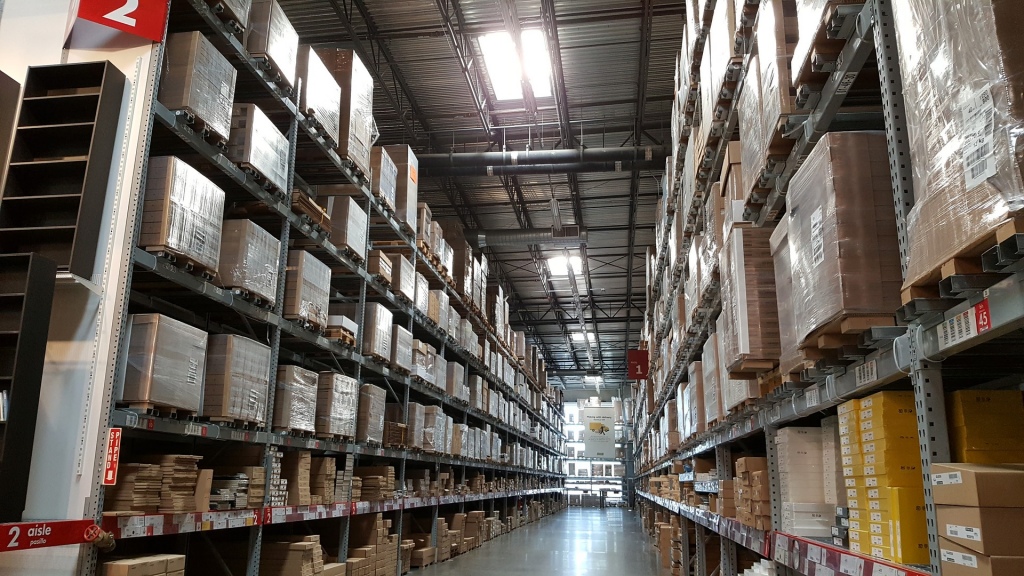

<p><span style="font-weight: 400">With the introduction of same-day shipping by Amazon, the shipping industry is on the constant search for more efficient methods of transporting goods across the globe. At the center of this process lie the many warehouses whose productivity and efficiency shipping companies heavily rely on.</span></p>
<p><span style="font-weight: 400">Every warehouse owner or manager wishes to increase the productivity of his/her storage unit but without underpaying the staff or jeopardizing their safety. We will let you in on some secrets to making your warehouse productive by investing in equipment and human resources.</span></p>
<h2><b>Establish a picking path</b></h2>
<p><span style="font-weight: 400">Whichever type of merchandise your warehouse may store, there should exist a picking path for all the goods coming in and leaving the storage facility. Such a path will help determine the flow of the entire structure.</span></p>
<p><span style="font-weight: 400">You need to know exactly where is the entry point for each type of goods, the path they take through the warehouse, and finally the place where they will get loaded onto trucks and vans once again. If the picking path is well-defined, you are setting the stage for increasing productivity.</span></p>
<h2><b>“We’re low on stock” and it’s a good thing</b></h2>
<p><span style="font-weight: 400">A warehouse might have more goods than your average supermarket but </span><a href="https://www.energystar.gov/ia/business/tools_resources/target_finder/help/Space_Use_Information_-_Supermarket_Grocery.htm"><span style="font-weight: 400">actual storage capacities</span></a><span style="font-weight: 400"> differ significantly. While a supermarket and the adjoining warehouse can afford to stock a huge number of a single good, the warehouse should constantly be low on stock.</span></p>
<p><span style="font-weight: 400">The main reason for this is that all items have a certain shelf life so frequent restocking is a reality. Workers, machines and vehicles like forklifts have to rotate large boxes to restock them, which is impossible if hundreds of boxes are tightly packed together on shelves. The lees boxes you have, the faster will you be able to restock every part of the warehouse, thus increasing productivity.</span></p>
<h2><b>Constantly invest in equipment</b></h2>
<p><img class="alignnone size-medium wp-image-12728" src="https://haznos.org/wp-content/uploads/2020/03/800px-Pompwagen-300x225.jpg" alt="" width="300" height="225" /></p>
<p><span style="font-weight: 400">Speaking of moving boxes and heavy crates around the warehouse, all the planning you make will be futile unless you’ve got the right machinery for the job. Long-term investing in equipment and vehicle operating inside the warehouse is basically the best thing you can do to increase productivity or stay in business generally.</span></p>
<p><span style="font-weight: 400">Every piece of equipment should be maintained regularly and properly but you ought to be ready when a piece of machinery fails. Even a </span><a href="https://www.mlaholdings.com.au/forklifts/mitsubishi/warehouse-forklifts/pallet-mover/1-0t-to-2-5t-hand-pallet-trucks-detail"><span style="font-weight: 400">hand pallet jack</span></a><span style="font-weight: 400"> that ceases to work can cause a disturbance in the flow of goods in the warehouse so you should consider </span><i><span style="font-weight: 400">renting </span></i><span style="font-weight: 400">as an emergency measure.</span></p>
<p><span style="font-weight: 400">In fact, if there are cargos that you rarely receive but that require special equipment to manipulate, it might be (financially) wiser to rent cranes and dozer required than to buy new or used ones.</span></p>
<h2><b>The height of the shelves</b></h2>
<p><span style="font-weight: 400">Warehouse operations that earn the most money are usually the largest ones. The more warehouses a storage company owns and the larger the individual structures are, the bigger the revenue. Bigger warehouses mean more space to fill with shelving which is not always a good thing.</span></p>
<p><span style="font-weight: 400">Namely, the more boxes there are in a storage facility, the harder it is to access them efficiently. That is why all items should vertically be arranged on shelves based on their popularity, sort to say. The packages you are shipped every day are going to be placed on lower shelves, while crates and boxes that might require moving once a year or less often should go on top shelves. In the long run, improved accessibility entails improved productivity of a given warehouse.</span></p>
<p><span style="font-weight: 400">After you have installed a reliable stocking system according to height, you are ready to extend the shelves all the way to the ceiling. The entire warehouse is yours to use so there is no real reason for the shelves not to run the height of the entire structure. Of course, keep in mind that if a tin roof covers the structure, it is going to get extremely hot or cold up there so don’t keep any food or similar goods up there.</span></p>
<h2><b>The human face of the storage industry</b></h2>
<p><span style="font-weight: 400">We’ve mentioned earlier how you should tap into human resources as well if you wish to increase productivity. The mindset of a true warehouse manager should perceive his/her employees are means of making the warehouse more efficient, rather than a hindrance because </span><a href="https://www.vox.com/2017/3/2/14792636/amazon-aws-internet-outage-cause-human-error-incorrect-command"><span style="font-weight: 400">millions of dollars are often lost</span></a><span style="font-weight: 400"> due to human error.</span></p>
<p><span style="font-weight: 400">Once you have provided the warehouse staff with everything necessary to perform their respective jobs, from financial incentives to proper safety gear, you’ll see how productive they can be. For example, if an older employee working a conveyor belt complaint of back pain, get them an anti-fatigue mat. Don’t be too strict about the rules unless they concern safety. A radio quietly playing in the back is perfectly OK on the warehouse floor.</span></p>
<h2><b>Loading and shipping manifests</b></h2>
<p><span style="font-weight: 400">Although the workers have to stick to a daily schedule of loading and unloading, the warehouse business is hectic in the sense that there are always last-minute requests from clients. Ideally, each route should come in or out in a particular delivery order but you should always have room for alterations. A manifest must exist and be printed out (or exist in the form of an e-document) every day but workers know that orders could change any minute and they should be ready to alter the loading procedure.</span></p>
<p><span style="font-weight: 400">The same goes for the actual shipping of goods which takes place outside the warehouse itself. Drivers who have picked up the goods for delivery are given the exact address and a timeframe but these too are susceptible to changes. Clients could be out for lunch or they can decide to receive the goods at another location, so shipping manifestos aren’t written in stone either.</span></p>
<p><span style="font-weight: 400">These were just some of the many tricks successful warehouse managers use to boost their facility’s productivity. A general conclusion is that the more money you invest in warehouse operations over an extended period, the lower will the total operational cost be.</span></p>

Tricks to Make Your Warehouse more Productive