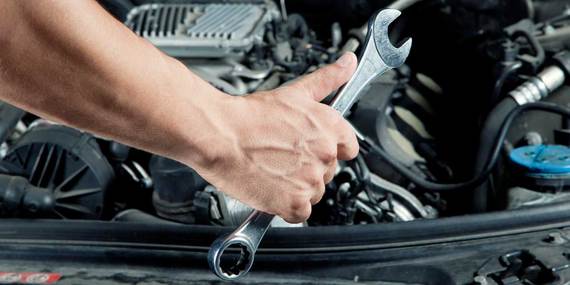

<p style="text-align: justify;">Car maintenance is a key aspect of being a driver, making sure that your car is safe to drive. Many mechanics recommend seasonal checks, as well as regular checkups too. As the snow, ice and cold become less of a problem, it’s important to look for issues that may present themselves in the following spring and summer months.</p>
<p style="text-align: justify;">There are 3 fundamental checks that you can do yourself, here you can find how to do the checks, why you need them, and ways to quickly spot a problem with your car.</p>
<h3 style="text-align: justify;"><strong>Battery</strong></h3>
<p style="text-align: justify;"><strong>Signs of Issues:</strong></p>
<p style="text-align: justify;">If you switch your car on, and the interior lights/headlights begin flickering or dimming significantly, it could be a sign of your car battery struggling. Other signs include slow power windows, or your engine turning over slowly when you try to start it.</p>
<p style="text-align: justify;">When it comes to checking your battery, you obviously have to be careful to avoid shocking or harming yourself, battery acid can potentially leak onto the contacts of the battery, and as such should be treated with care.</p>
<p style="text-align: justify;">A fully charged battery should run at 12.6 volts or more, to check that your battery has sufficient charge, take a voltmeter, set it to 20 volts, and touch the positive probe to the positive terminal, and the negative probe to the negative terminal.</p>
<p style="text-align: justify;">If the battery has under 12 volts, it’s classed as discharged, and you should look into replacing it as soon as possible.</p>
<p style="text-align: justify;">There can be problems with the car’s electrical system that will cause draining issues as well. To fully check, make sure to remove the battery and test it while it’s disconnected from the car.</p>
<p style="text-align: justify;">When you purchase car parts, ensure that the retailer is licensed to distribute genuine car parts, Volkswagen Motor Parts have a great post to highlight benefits of buying genuine parts.</p>
<h3 style="text-align: justify;"><strong>Brakes</strong></h3>
<p style="text-align: justify;">Brakes are incredibly important to check regularly, as they assure a large amount of safety while driving. If you brake, and the pedal feels particularly soft, that is a pointer to the brakes not functioning very well. If the brakes make loud grinding or squealing noises, you need to check them as soon as possible.</p>
<p style="text-align: justify;">After consulting the car owner’s manual, you need to check how long the brake pads are supposed to last, it can vary from 25,000 miles to 70,000.</p>
<p style="text-align: justify;">You can check the brake disc without necessarily having to remove the wheel, make sure to check for heavy rust, uneven wear, or scoring. If your disc has any of the above, make to have it looked at by a professional.</p>
<h3 style="text-align: justify;"><strong>Tires</strong></h3>
<p style="text-align: justify;">You need to check your tyres monthly, and kicking the tyre to gauge inflation levels won’t suffice. Most modern cars have built in pressure sensors, but to ensure even tread wear, check using a pressure gauge, or take it to a tyre pressure station at a garage.</p>
<p style="text-align: justify;">To check wear on a tyre, use a 20p coin and place it in the tread. If the outer band of the 20p fits into the groove and is no longer visible, it’s above the legal limit. It is also worth noting that you should check to see if wear is even, in case there is an issue that could be solved early on. To read more into tyre safety, check tyresafe.org for more.</p>
<p style="text-align: justify;">Once you’ve checked these three, make sure to check back in 4 weeks time, maximum! Regular checks ensure proper safety when you drive your car.</p>

3 Spring Maintenance Tasks You Can Carry Out On Your Car Yourself