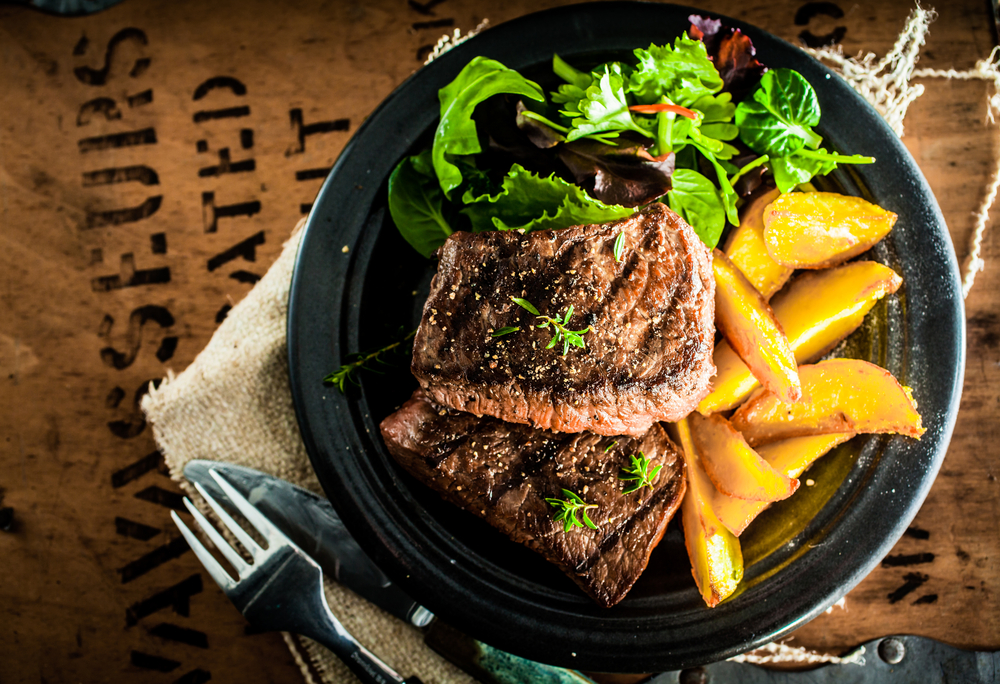

<p style="text-align: justify;">Everyone enjoys taking a bite of a thick, juicy steak. However, it may get a bit confusing choosing between all the different kinds of meats, cuts, and cooks that are available.</p>
<p style="text-align: justify;">In order to have a wonderful dining experience, you have to know your steaks well. We will give you a quick crash course on what you need to know about this deliciously mouth-watering dish.</p>
<h2 style="text-align: justify;"><strong>Choosing the Cut of Your Steak<br />
</strong></h2>
<p style="text-align: justify;">Enjoying a delectable steak meal starts with choosing what kind of steak is best for you. Surely you have heard of or eaten different cuts of steak like T-bone and tenderloin, and may have absolutely no idea what the difference is between all these. Well, these cuts depend on what part of the cow they are from. The latter determines how much fat they contain and how tender they are.</p>
<ul style="text-align: justify;">
<li><strong>Tenderloin</strong> &#8211; Also known as filet mignon or chateaubriand, this is from the short loin under the ribs. These are thick and lean cuts that have minimal fat marbling. This classic cut may be the most tender but has a less flavorful taste.</li>
</ul>
<ul style="text-align: justify;">
<li><strong>New York Strip</strong> &#8211; Also known as strip, top sirloin, top loin and contre-filet, this is from the short loin behind the ribs. This has medium fat content, but is still tender and has a fine-grained texture.</li>
</ul>
<ul style="text-align: justify;">
<li><strong>T-bone</strong> &#8211; The cross section of the short line. One side of the bone is the tenderloin while the other is a New York Strip. Here, you can enjoy tender and buttery, and juicy and beefy flavors all in one cut.</li>
</ul>
<ul style="text-align: justify;">
<li><strong>Ribeye</strong> &#8211; Also known as Entrecôte, Delmonico and Scotch fillet, this is from the upper rib cage. This cut has plenty of fat marbling, making this steak very juicy and flavorful. This is generally considered to be the best and most delicious cut.</li>
</ul>
<h2 style="text-align: justify;"><strong>Enjoy the Doneness of your Liking<br />
</strong></h2>
<p style="text-align: justify;">No matter what cut you choose, you will not give your steak justice if it is not cooked properly. The doneness of your meat can really determine whether or not you will enjoy your meal.</p>
<ul style="text-align: justify;">
<li><strong>Rare</strong> &#8211; Internal temperature of 120-130 F. The meat will be soft to the touch. It is brown around the sides, yet bright red in the middle.</li>
</ul>
<ul style="text-align: justify;">
<li><strong>Medium rare</strong> &#8211; Internal temperature of 130-135 F. This is typically the recommended cook for any kind of steak. The meat will be softer going towards the middle. The sides are brown, but the middle will be red with a hint of pink.</li>
</ul>
<ul style="text-align: justify;">
<li><strong>Medium</strong> &#8211; Internal temperature of 140-150 F. This cook pleases almost everyone as it is neither too red nor too cooked. There will be a pinkish color throughout the middle.</li>
</ul>
<ul style="text-align: justify;">
<li><strong>Medium Well</strong> &#8211; Internal temperature of 155-165 F. There will be a hint of pink in the middle. It is stiff to the touch yet a bit soft in the center.</li>
</ul>
<ul style="text-align: justify;">
<li><strong>Well</strong> &#8211; Internal temperature of 170 F or higher. This is perfect for those who like their meat cooked all throughout. The meat will be completely brown and solid to the touch.</li>
</ul>
<h2 style="text-align: justify;"><strong>Cooking and Preparing Your Steak</strong><strong><br />
</strong></h2>
<p style="text-align: justify;">In order to get the best cook and flavor out of your steak, you must be meticulous with how you cook and prepare your meat.</p>
<ul style="text-align: justify;">
<li><strong>Marinate &#8211; </strong>You may add marinade to your meat depending on the flavors you want to bring out. This also helps tenderize your stakes. However, also note that higher quality steaks may taste best if left alone with just a bit of seasoning.</li>
</ul>
<ul style="text-align: justify;">
<li><strong>Salting </strong>&#8211; Do not be shy when seasoning your steak with salt. This allows the moisture to retain on your meat.</li>
</ul>
<ul style="text-align: justify;">
<li><strong>Room temperature</strong> &#8211; Your steaks should be taken out of storage at least 30 minutes before cooking to allow it to thaw. Leave it out, and your meat will be ready for cooking once it reaches room temperature.</li>
</ul>
<ul style="text-align: justify;">
<li><strong>Hot pan</strong> &#8211; Make sure to get your pan hot before putting down your steak. Gently press down on the meat without moving or jiggling it around. It is recommended that you cook one side, then flip it just once to get the right cook on the other side. Carefully time your cooking or use a meat thermometer to precisely get the doneness you want.</li>
</ul>
<ul style="text-align: justify;">
<li><strong>Keep the juices in</strong> &#8211; Prevent from poking through your meat when cooking so that the juices don’t escape. Once cooked to your liking, do not slice and just let it rest for 5 to 15 minutes so as not to bleed out.</li>
</ul>
<p style="text-align: justify;">All this may seem like a very exact and delicate process just for a piece of meat. However, it will surely be worth all the trouble once you have that delicious bite of well-cooked quality steak. Bon appetit!</p>
<p style="text-align: justify;"><em>Ryan Davis is the owner of Argyle Catering the best company for </em><em>catering Jefferson City, MO</em><em> has to offer.</em></p>

Steaks: All About Everyone’s Favorite Meat