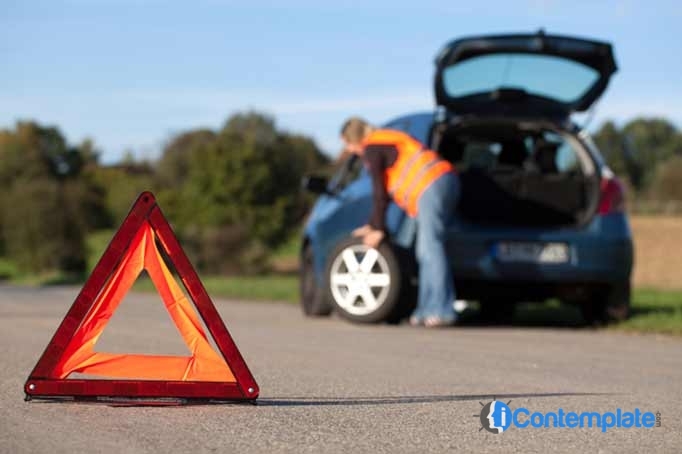

<p style="text-align: justify;">Breaking down can be a scary event, particularly if you are on the side of a motorway or a long way from home. With a few helpful tips, however, you can stay safe and be on your way as quickly as possible regardless of whether or not you can change a spare tyre! The top priority is to stay safe before trying to fix a problem or get help. Bear that in mind when reading the rest of this useful guide.</p>
<h3 style="text-align: justify;">Anticipating a Breakdown</h3>
<p style="text-align: justify;">Hindsight is a wonderful thing, but even more wonderful is foresight. Be prepared for a breakdown event all year round to minimise the pain should one occur. This includes carrying clothing appropriate for the weather and wearing suitable footwear when driving. Carry a bottle of water in the car, particularly in hot weather. A luminous jacket and emergency sign are also useful and, in some countries, a legal requirement for you have on board.</p>
<h3 style="text-align: justify;">Getting to Safety</h3>
<p style="text-align: justify;">As soon as you are aware of a problem with the car it is important to begin your journey to safety. Make a judgment call as to whether or not you can make it home, to a garage or off a motorway at the next junction, taking into account the problem you have identified as well as the weather and driving conditions. If it is safe for you to do so, carry on until a garage, slip road or service station as these are far safer places to stop than at the side of the road.</p>
<p style="text-align: justify;">If the circumstances dictate you must pull over, carefully indicate and pull over onto the hard shoulder or left hand side of the road. Put the car as far away from the traffic as possible whilst remaining on the hard shoulder. Once you have stopped, carefully get out of the car avoiding oncoming traffic. Take out any provisions you have in the car and move away from the road onto the grass banking where possible.</p>
<p style="text-align: justify;">It is advisable to leave the car by the left hand door, particularly when pulled up on the hard shoulder of a motorway.</p>
<p style="text-align: justify;">Leave your hazards on, but turn off headlights and other electronics to save your car’s battery. If visibility is poor turn on the car’s fog lights too.</p>
<h3 style="text-align: justify;">Calling for Help</h3>
<p style="text-align: justify;">Unless you are absolutely confident you can change the car’s tyre, and the puncture is on the side of the car away from oncoming traffic, the next step is to call for breakdown cover or a <strong>mobile tyre fitters</strong>. The former can be used for all manner of breakdowns, whilst the latter may be able to save you money by repairing or replacing your punctured tyre at the side of the road.</p>
<p style="text-align: justify;">Naturally, evaluate the type of problem you have before calling for help. Then, describe your problem and location carefully to the receiver of the call. They will then be able to inform you how long you have to wait.</p>
<p style="text-align: justify;">If you aren’t covered by breakdown cover, do not fear as most companies will allow you to sign up on the side of the road.</p>
<p style="text-align: justify;">When waiting for help to arrive, it is important to stay close to your vehicle but away from the road. If you are travelling alone and feel vulnerable, phone the police on the none emergency number, who will be able to assist. Let the breakdown company know this information too as they may be able to send assistance to you more quickly.</p>
<h3 style="text-align: justify;">Re-joining the Road</h3>
<p style="text-align: justify;">If the problem can be fixed at the side of the road, re-joining can be a tricky manoeuvre. In many cases, the breakdown engineer will drive out ahead of you, meaning all you have to do is follow suit. In any case, build up speed on the hard shoulder before attempting to merge across into the left hand lane, taking care to watch for oncoming traffic and any other vehicles on the hard shoulder.</p>
<p style="text-align: justify;">Often the breakdown engineer will drive alongside you for a short while once you are back on the road to ensure the problem is truly fixed.</p>
<p style="text-align: justify;">Remember that throughout the breakdown you are the best positioned person to make decisions. Stay calm and focused and, by following these simple steps, you’ll find you are quickly and safely back on the road.</p>

What To Do In A Breakdown