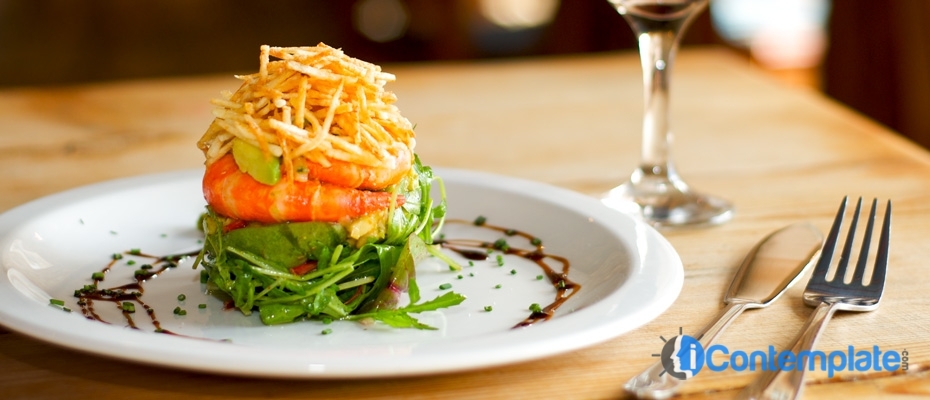

<p style="text-align: justify;">While it may appear on the surface as if food photography is a pretty easy subject and talent to master, the truth is quite to the contrary. This should be rather evident in the fact that the post of professional <strong>food photographer</strong> is one of not only great prestige, but is also a career area that’s desperately in need of new talent. After all, there’s a very big difference between arming yourself with a camera to snap a few random pictures and being a genuine artist with food photography – the latter being a wholly different ball game.</p>
<p style="text-align: justify;">Of course, even if you have no real intention of going pro and wouldn’t have the time to fit in the course and classes anyway, there’s nothing to say you cannot make the effort to improve your skills a decent amount. What’s interesting about food photography is the way in which the vast majority of those struggling to improve what they do are not being held back by a lack of talent or even poor equipment. Instead, they’ve fallen into one of the few bad habits that tend to creep into the equation for pretty much everyone with an interest in food photography somewhere along the lines.</p>
<p style="text-align: justify;">So if food photography is your thing but you’re finding yourself facing something of a brick-wall progress-wise, here’s a quick look at the five most fatal bad habits of all that will do nothing but hinder your progress.</p>
<h3 style="text-align: justify;">1 – Overcooked Food</h3>
<p style="text-align: justify;">First of all, one of the most important cardinal rules when it comes to great food photography is to make sure that the food is never, ever overcooked. In fact, one of the key tricks of the trade is to take photographs of food and dishes that are actually very slightly undercooked. This of course makes life difficult if you were planning to eat the meal you’re shooting snaps of, but in terms of getting the best shots, undercooked is often the way to go. Take any carrot or piece of broccoli, drop it into boiling water and you’ll see how the colour hit their highest levels of vibrancy before full cooking is achieved. And the more you cook most ingredients, the less vibrant and appealing they become.</p>
<h3 style="text-align: justify;">2 – Food That’s Too Hot</h3>
<p style="text-align: justify;">You might also find that one of the problems you’re facing can be attributed to food that’s too hot. There are two issues here and the first is the more obvious of the two – a billowing cloud of steam isn’t necessarily a camera’s best friend. Along with this, never forget that the hotter the food on the plate is, the more difficult it can be to handle and get into position. Food naturally tends to become softer, limpier and generally less cooperative when it’s red hot, so try giving things a little while to cool down and firm up before taking your shot.</p>
<h3 style="text-align: justify;">3 – Using the Camera’s Flash</h3>
<p style="text-align: justify;">Above all other rules in the book, there are none that need to be followed with as much strictness as this one – never, ever use your camera’s standard flash when shooting food snaps. As much as it may appear as if food is a simple subject to shoot, you’re actually looking at a uniquely complex combination of colours, angles, dimensions and shadows. As such, to blast the plate from any one direction with a camera flash is 100% guaranteed to result in a bum shot. By contrast, natural light from multiple angles can work wonders.</p>
<h3 style="text-align: justify;">4 – Not Experimenting with Angles</h3>
<p style="text-align: justify;">Still on the subject of angles, there are literally infinite angles from which you can experiment with the shots you take, so there’s nothing to gain from sticking to just one. Quite often, what appears to be the most obvious ‘front’ of the dish will in no way represent the ideal side from which to nail that killer shot. Go around the dish and take a look from all twelve ‘clock’ positions in order to determine where to plan your attack from.</p>
<h3 style="text-align: justify;">5 – Overlooking Assembly</h3>
<p style="text-align: justify;">Last but not least, to shoot food that hasn’t been meticulously styled is a little like sending a model down a runway with no makeup. The simple fact of the matter here is that while it may look appealing enough to eat on the plate, this doesn’t necessarily mean it’s going to picture well. Food styling is an art that’s as complicated and important as the actual food photography itself, so it’s important to ask yourself how much time and effort you’ve put into the food styling if your shots just aren’t coming out as they might.</p>

5 Fatal Food Photography Bad Habits To Oust Immediately