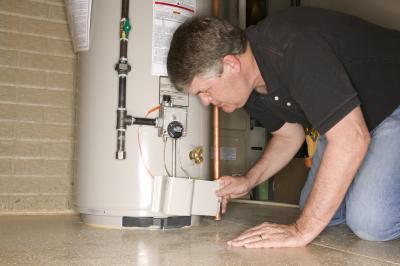

<p style="text-align: justify">Your home&#8217;s furnace heater is a complex piece of machinery, one that needs to be kept in excellent condition in order for it to operate efficiently. Various noises coming from the unit can often mean specific problems, some of which you may not be able to fix on your own. Here are a few signs that your heater may need servicing by a professional.</p>
<h2 style="text-align: justify"><strong>1) Rumbling Noises </strong></h2>
<p style="text-align: justify">If you have a gas-powered heater, the unit will draw a great deal of air from the nearby indoor environment. The filters are designed to catch any particulates as well as other airborne material such as pet hair and lint. If the filters become clogged, the trapped soot can become moist and form a series of clogs.</p>
<p style="text-align: justify">When this happens, the heater will begin to rumble because the clogs will prevent clean air from reaching the gas burners. The dirt buildup on the burners will create a low, growling sound when the furnace is in operation. Cleaning the burner units requires special attention from a licensed heating and air conditioning specialist. Also, the filters will have to be replaced.</p>
<h2 style="text-align: justify"><strong>2) High-Pitched Squealing</strong></h2>
<p style="text-align: justify">Furnaces that have rotary motor operation contain ball bearings. If these become dirty, they begin to vibrate and rub against the adjacent metal. The loss of lubrication can mean damage to the bearings as well as to the metal surface along which they roll. This results in a squealing noise that is constant in frequency. Lubrication of the bearings is not a simple procedure and should be performed by a furnace repair expert.</p>
<h2 style="text-align: justify"><strong>3) Humming Sound From The Motor</strong></h2>
<p style="text-align: justify">A failing motor unit will hum because the moving parts are creating too much friction. The parts will soon burn out, leaving you with an inoperable furnace and no heat. Any type of motor hum is an indication of parts wear, and the unit should be inspected immediately.<br />
It is very important that your furnace motor receive a tune-up every year or so. The motor contains a number of moving parts that can become weakened if overheating of the metal occurs. If the furnace motor attaches to a fan with belts, expansion or misalignment of the fan rotor can also cause a humming sound. This requires attention from a repair specialist.</p>
<h2 style="text-align: justify"><strong>4) Rattling Noise</strong></h2>
<p style="text-align: justify">Furnaces powered by natural gas have a special type of heat exchanger. The exhaust gas contains a good amount of carbon monoxide, and if there is a leak in the system, this exhaust gas will create a rattle noise if there are cracks present in the exchanger unit. This will lead to operations failure and no heat production. Only a licensed professional can determine the exact cause of rattling within the unit, but a cracked heat exchanger must be replaced immediately.</p>
<h2 style="text-align: justify"><strong>Affordable Repairs</strong></h2>
<p style="text-align: justify">Most electric or gas-powered heaters run normally for many years so long as scheduled maintenance is performed. Having the system checked out every one or two years is always a good idea. This will significantly lessen any repair costs because complex service work will become less frequent. However, if your heater is making strange noises, remember that a licensed repair specialist can perform the work more efficiently than you can, and the repair procedures will often come with a limited warranty on all parts installed.</p>
<p style="text-align: justify">Charlie Teschner started MESA Plumbing, Heating, and Cooling in 1982. Charlie has a journeyman and master plumber’s license. He was raised with a strong work ethic and he now applies those values to tasks such as Longmont heating repair.</p>

What Is That Noise From The Heater?