
<p style="text-align: justify;">We live a lot longer these days than nature intended us to, and our teeth have not evolved to be any more durable than when they only needed to last until our forties in caveman times. (It has been said many times that the evolution of a third set of teeth, coming in at around age 35 – 40 is long overdue!) This means that most people have problems with their teeth as they age, even if they look after their teeth exceedingly well, right from childhood. With Hollywood movies and even local television stars and presenters leading the way, there is a growing expectation to have good looking teeth: nice and white and even. Nature often is disobliging in this regard, giving us functional, but not terribly attractive, uneven and yellowish chompers instead! The end result has been a huge growth in the dental industry, first for mouth health and more recently for more cosmetic reasons.</p>
<p style="text-align: justify;">There are many choices available today, for those who have lost their natural teeth, or who have unsightly, broken or painful teeth and almost everyone can benefit from these modern techniques. If you do not like the idea of dentures because they tend to slip and slide and get food caught underneath them, and cannot have a crown or a bridge fitted because your existing teeth are too weak or damaged, then you might like to consider having implants fitted instead.</p>
<h3 style="text-align: justify;"><strong>What are Implants?</strong></h3>
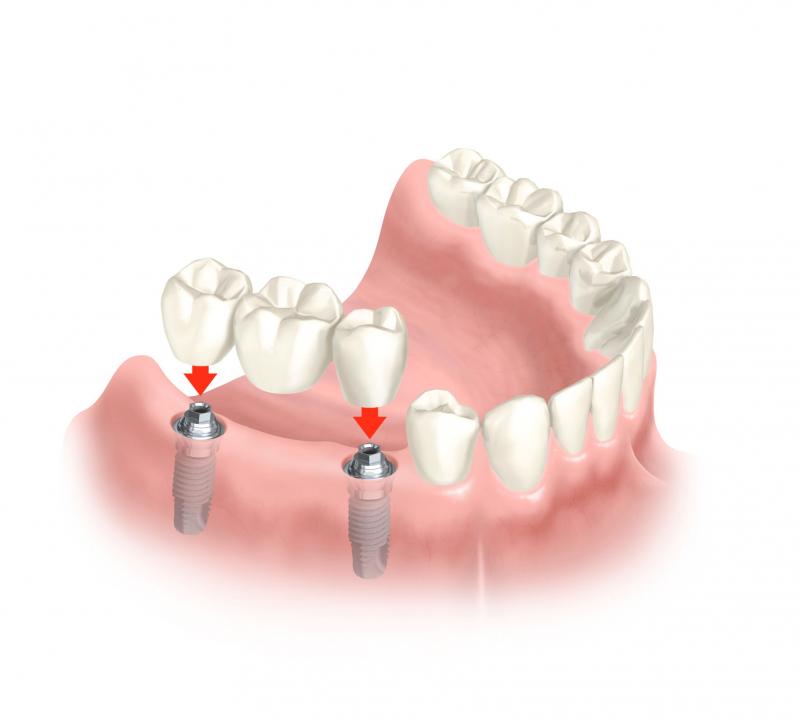
<p style="text-align: justify;">Dental implants are false teeth that are permanently in place, anchored by a titanium peg which is placed into the jawbone.</p>
<h3 style="text-align: justify;"><strong>Who can get Implants?</strong></h3>
<p style="text-align: justify;">Your dentist will need to examine you, and make sure that you do not have any issues with the bone in which the peg will be seated. People with periodontitis or diabetes may be advised against having dental implants as they will have issues with healing. Smokers too are strongly encouraged to give up smoking before undergoing the lengthy process involved in having dental implants. If you are otherwise healthy, then you will probably be suitable for dental implants. If you have lost teeth due to gum disease, but it has now cleared up, you will still be able to have an implant; it is only untreated gum disease that can cause healing problems. (Please note, if you have suffered from gum disease in the past, you must look after your oral hygiene carefully, even when you have the implants, as it can recur.)</p>
<h3 style="text-align: justify;"><strong>The First Step</strong></h3>
<p style="text-align: justify;">Your dentist will give you a local anaesthetic to numb your mouth. If you are a nervous patient, or if the dentist thinks the procedure will take a very long time, he or she may give you an injection of an intra-venous sedative. (In very rare cases a general anaesthetic will be used, but this is very uncommon indeed.) Next the dentist will cut through your gum to reveal the jawbone. If previous tests have found your own bone to be insufficient, it is at this point that a graft will be placed. Otherwise, a hole will be drilled into your jaw, and the implant peg will be placed, with the dentist working carefully to ensure that there is a very snug fit. Your gum is then placed back into position and the incision is sewn up.</p>
<h3 style="text-align: justify;"><strong>What Next?</strong></h3>
<p style="text-align: justify;">This is just the first step, and the implants must now be carefully looked after as they settle into place and the jawbone accepts the implant as being a part of it. This step can take as long as six months, and you will probably be given temporary bridge or dentures so that you can eat and talk without issues.</p>
<h3 style="text-align: justify;"><strong>After Six Months?</strong></h3>
<p style="text-align: justify;">You go back to your dentist and he or she will essentially repeat the anaesthetising and incising process, so as to see the implant once more. This time, an attachment is fitted to the implant and this attachment protrudes from the gum and forms the base for the tooth or teeth to be fitted. Again, this will not all happen at once. The dentist will put in all the attachments needed, and then take a mould of how they are arranged in your mouth. This mould will be used to make the teeth that will fit onto the pegs, ensuring a good fit that is able to deal with the pressures of biting and chewing. These will be fitted at a later appointment, without the need for any more incisions or anaesthetic.</p>
<h3 style="text-align: justify;"><strong>Can Implants be Completed in One Day?</strong></h3>
<p style="text-align: justify;">There is such a thing as &#8216;immediate implants&#8217;. Ask your dentist if they are suitable for your situation.</p>
<h3 style="text-align: justify;"><strong>How Long will Implants Last?</strong></h3>
<p style="text-align: justify;">If you look after your new teeth and stay in good health, your implants can last a very long time (although there is no lifetime guarantee) perhaps even seeing you into good old age.</p>
<p style="text-align: justify;">By Nick Davison</p>
<p style="text-align: justify;">Nick Davison writes about a number of health related issues, including dental care and cosmetic dentistry, to read more of Nick&#8217;s work, follow him on Google Plus.</p>

What Is Involved In A Dental Implant Surgical Procedure?