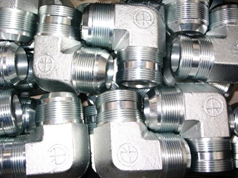

<p style="text-align: justify;">There are a vast number of hydraulic machinery having different applications. One intricate part that transcends the varying hydraulic systems and their design is the Hydraulic Fitting.</p>
<h2 style="text-align: justify;"><strong>The Basics</strong></h2>
<p style="text-align: justify;">The liquid fluid power principle of operation that drive hydraulic systems, require the use of components grouped into sources (e.g. pumps), controls (e.g. valves) and actuators (e.g. cylinders). Well directed flow of hydraulic fluid between these components is important to ensuring optimal functioning of the hydraulic system.</p>
<p style="text-align: justify;">There are a variety of ways to direct this flow or maintain the interaction between components. In general however, the most common method, is to provide in each component a female-threaded port and on each hose or tube a female-threaded captive nut. These two are then connected with a separate adapter fitting having matching male threads.</p>
<p style="text-align: justify;">The adapter fitting referred to in the previous paragraph is also referred to as a hydraulic fitting. The complexity of hydraulics machinery over time has ensured that more hydraulic fittings find their way into hydraulic systems, and do so with diminishing semblance to each other. The basics of their operation remain the same though, what spells them apart are; the materials used in their manufacture, the form factor assumed, and the intricate design of the hydraulic system.</p>
<h2 style="text-align: justify;"><strong>Reasons for the use of Hydraulic Fittings</strong></h2>
<p style="text-align: justify;">In the previous section, one obvious reason for the use of hydraulic fittings was explicated. Another owes its exposition to the nature of hydraulic systems as requiring the need for servicing and replacements with continued use. Thus, instead of having components welded or brazed together, removable fittings are used.</p>
<p style="text-align: justify;">In addition to the pair of reasons described above, the use of hydraulic fittings support the following purposes:</p>
<p style="text-align: justify;">• Joining of components having different port sizes.<br />
• Facilitating communication between components of different standards.<br />
• Ensuring precise orientation of components.<br />
• Incorporating a bulkhead hardware to pass fluid through an obstructing wall.<br />
• Allowing for tact support of high-stress components.<br />
• Ensuring that valves and hoses are not modified for compatibility reasons.</p>
<p style="text-align: justify;">The enumerations above does not exhaust the purposes for which hydraulic fittings are routinely used, but provide a framework to understanding the role hydraulic fittings play in a hydraulic system.</p>
<h2 style="text-align: justify;"><strong>Types and Forms</strong></h2>
<p style="text-align: justify;">There are many types of hydraulic fittings and the substantial number of specialty manufacturing hydraulic fittings does not really help in trammeling down the number of types. The common classes of hydraulic fittings used include: the all-metal, O-ring and hydraulic flanges. While the all-metal class of hydraulic fittings are as you’d guess completely made of metal, the O-ring class fittings are made from rubber.</p>
<p style="text-align: justify;">Flange or split-flange fittings noticeably differ in functionality. They are used in high-pressure applications and most tubing exceeding 1 inch in diameter. Basically, they consist of four parts: a flanged head, an O-ring, and two mated clamps.</p>
<p style="text-align: justify;">Within these classes and across other lesser known classes, forms of fittings differ in angle (which is sometimes implied in their identification/name), [attachment] style (including crimp fittings/crimpers) and thread type.</p>
<p style="text-align: justify;">Identification guides and like materials can be used to acquire more information on the different types of hydraulic fittings.</p>
<h2 style="text-align: justify;"><strong>In a Nutshell</strong></h2>
<p style="text-align: justify;">It is important to understand hydraulic fittings to save time and money when looking to purchase one or identifying a fault in the fitted area of a hydraulic system. On top of all that’s already been pointed out, it is vital to note the application, size, heat and pressure limits as well as the fluid compatibility of the hydraulic fitting you’re after.</p>
<p style="text-align: justify;">Experts in the manufacture, installation, repair and sale of hydraulic fittings and crimpers can help in providing the technical details that’d make all the difference.</p>

Understanding Hydraulic Fittings