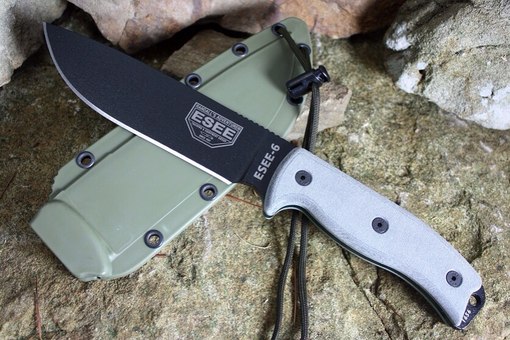

<p style="text-align: justify">We all know how indispensible survival knives can be, for anyone fighting the odds in the wilderness! Since centuries, survival knives have been used by people for the varied purposes of self defense, hunting food, finding water, making tools and first aid, besides other things. One even hears stories of how, during the two world wars, defence personnel carried these knives, as mandatory survival aids! Survival knives are designed to help individuals cope better in severe circumstances. Situations that may be so adverse, that gaining access to basics like food and water may be challenges in themselves.<br />
However, for such knives to effectively support your survival in difficult situations, it is essential that they have what it takes, to help you survive adversity! So whether you are a hiker, adventure enthusiast, wilderness freak, or a wild life sports buff; if you are planning on buying a survival knife, there are some pointers you must consider, before doing so!</p>
<h2 style="text-align: justify"><strong>Understand the Anatomy of Survival Knives</strong></h2>
<p style="text-align: justify">Before going to a store that stocks survival knives, ensure that you have first done your homework on the subject, from online stores and other retail outlets! Your research should include aspects like- price, features and the different makes of such knives. And prior to this, do devote some time to getting familiar with the different parts of survival knives.<br />
Survival knives like other knives, have essentially three main parts- the blade, the bolster and the handle. The bolster is the zone that joins the blade with the handle. The blade area of the knife can be further divided into a blunt side-called the ‘spine’; and a sharp side- called the ‘cutting edge’. Vertically, the blade again has two segments, being the ‘tip’ which is the slanted edge of the knife; and the ‘heel’ –which is the sharp, but un-slanted area of the blade, closest to the handle.<br />
The handle area may be made from wood, rubber or a host of other material. It essentially comprises of the ‘tang’, ‘butt’ and ‘rivets’. Tang- is the lower portion of the blade that extends down the handle, but which is covered by the handle and hence, is not visible to the eye. Rivets- are what join the lower end of the blade with the handle; and finally the Butt- is the lowest end of the handle.<br />
Now, that we have understood what the varied parts of survival knives are-here’s a list of all the things you need to keep in mind, in order to buy the best one for yourself.</p>
<h2 style="text-align: justify"><strong>Tips on Buying the Best Survival Knife</strong></h2>
<ul style="text-align: justify">
<li> Survival knives with a full tang or a blade running all the way down to the base of the handle are considered to be much stronger and more durable.</li>
<li> When choosing between survival knives with fixed or folding blades, experts believe that the fixed blades are more effective for use in the outdoors.</li>
<li> Wildlife professionals, who have a lot of experience in using survival knives, caution against buying knives that have hollow bases. According to them, this impedes the strength of a knife considering that it does not have a full tang.</li>
<li>It is always advisable to buy knives with hard blades that have been made from either stainless steel or carbon. The reason being, that these are known to be hardy and long lasting even in extreme weather conditions.</li>
<li>While both jagged and straight blade survival knives are available in the market; those in the know, suggest that- straight blades are definitely a more sensible option; given that they cut wood more easily and can also be sharpened on old stones with much less effort.</li>
<li>It is important to pay attention to the blade size, when buying survival knives. While most survival knife blades are sized between 4 and 7 inches, the ideal length size of survival knives- it is supposed, should be 6 to 12 inches.</li>
<li>Another aspect that needs to be considered, when buying survival knives is the thickness of the blade of a knife. The reason why this matters is because, knives with slightly thicker blades are known to handle the wear and tear of harsh environments better.</li>
<li>Veterans also caution against buying survival knives, whose handles have other features, for example-a kind of gadget or a holder. They feel that, this compromises the user’s grip on the knife and can lead to a risky situation- should the knife slip away from his/her hand in the face of danger. Survival knives with handles that offer a firm grip and the necessary balance are the ones to buy.</li>
</ul>
<p style="text-align: justify">This article was written by Greg. S. Alberto, a travel writer, an adventure enthusiast and an experienced buyer of survival knives.</p>

Things To Consider Before Choosing The Best Survival Knife