
<p style="text-align: justify">OSHA identifies and provides minimum requirements for appropriate PPE, also known as personal protective equipment. This equipment includes gloves, hard hats, eyewear, vests, suits, and other protective materials.</p>
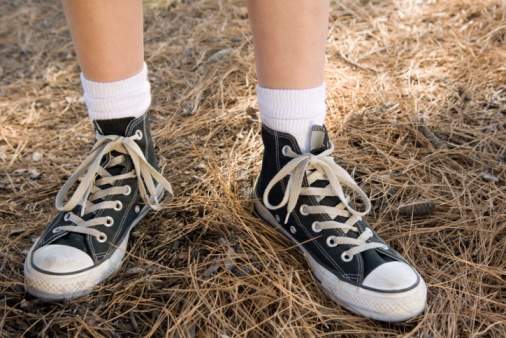
<p style="text-align: justify">Footwear is one of the most overlooked protective materials when it comes to safety and comfort. Bad shoes can cause an array of problems ranging from poor posture and bad spasms to toe-crushing and burning. Employees facing possible foot or lower leg injuries from falling or rolling debris, or from crushing or penetrating materials, should wear protective footwear. In addition, workers who are exposed daily to hot substances or surfaces, poisonous materials, or corrosive platforms must cover exposed body parts, including feet.</p>
<p style="text-align: justify">If you’re an employer you’ll want to ensure that your employees are showing up to work with the proper footwear, and if they forget, provide them with another pair prior to their shift. If you do not have another pair, you should deny their involvement for the day until they can find protective footwear. It’s only takes one time for an accident to occur. OSHA will be looking and fining companies with employees working in hazardous conditions without proper protective wear.</p>
<h2 style="text-align: justify"><strong>What Type of Shoe should I Buy? </strong></h2>
<p style="text-align: justify">Depending on your company’s work, you’ll need to find the proper application for the protective shoes you’ll require for all of your employees. For example, if you’re mining and working with explosives, you must wear electrically conductive shoes. These shoes provide protection again the buildup of static electricity. Too much build-up could lead to a spark, consequentially igniting fuses on the ground and creating premature explosions.</p>
<p style="text-align: justify">Another example involves the construction industry, where workers are walking over unfinished flooring and stepping on hazardous materials. Safety shoes, which have impact resistant toes and heat resistant soles, protect feet against hot working surfaces such as roofing, paving, and metal, as well as puncture wounds. The following are the main types of protective shoes for workers:</p>
<h2 style="text-align: justify"><strong>Toe Guards<em> </em></strong></h2>
<p style="text-align: justify">fit over existing toes and made of steel, aluminum, or plastic. They are great protection from moderate impact.</p>
<h2 style="text-align: justify"><strong>Safety Shoes<em> </em></strong></h2>
<p style="text-align: justify">the most widely used shoe in the business, they are impact- resistant and heat-resistant. The shoes are made to protect workers in just about any situation.</p>
<h2 style="text-align: justify"><strong>Electrically Conductive Shoes </strong></h2>
<p style="text-align: justify">If you’re looking for special purpose shoes, this feature can be added to most safety shoes. These shoes will only protect against the buildup of static electricity, they will not completely eliminate the possibilities of electrocution.</p>
<h2 style="text-align: justify"><strong>Electrical Hazard, Safety-Toe Shoes </strong></h2>
<p style="text-align: justify">These bad boys are nonconductive and will protect the worker against open circuits of up to 600 volts in dry conditions. The shoes are designed to stop the electrical current by grounding the shoe enough to break the circuit.</p>
<h2 style="text-align: justify"><strong>Foundry Shoes<em> </em></strong></h2>
<p style="text-align: justify"><strong><em></em></strong> These leather protective boots are the same as safety shoes without the laces and tongues. Foundry shoes are meant to keep anything and everything out of your shoe. For example, if you have ever stepped in an ant pile, you know how fast you want to tear off your shoes and run around like a chicken. With foundry shoes, if they are tall enough up the leg, you’ll never have that problem. They insulate feet from extreme heat and keep hot metal from lodging in shoe eyelets, tongues, or other shoe parts.</p>
<p style="text-align: justify">Safety footwear must meet ANSI minimum compression and impact performance standards in ANSI Z41-1991. If you’re workers are located in an area with the following situations, but do not have protective footwear, if OSHA inspects your facility you’ll be out a lot of money:</p>
<ol style="text-align: justify">
<li><em>Slippery surfaces</em></li>
<li><em>Sharp objects such as nails or spikes.</em></li>
<li><em>Rolling equipment or electrical areas</em></li>
<li><em>Extremely hot areas with molten metal or other hot materials present.</em></li>
</ol>
<h2 style="text-align: justify"><strong>The Bottom-Line</strong></h2>
<p style="text-align: justify">Protective wear is important for two reasons. First, the safety of your worker is paramount because lost labor will affect costs and productivity. In addition, OSHA fines are upwards of $200,000.00 for severe violations. Secondly, workers who are severely injured on the job unprotected have the ability to sue the company for unsafe working conditions often causing bankruptcy and seizing of assets.</p>
<p style="text-align: justify">Eduardo Dieguez is a 1st generation American born Cuban that is currently in pursuit of his AA Degree at Valencia CC. He is a professional writer and blogger for www.eCompliance.com. An avid computer enthusiast, Eduardo spends countless hours tinkering with electronics both new and old.</p>

How To Ensure Your Employees Have The Proper Footwear