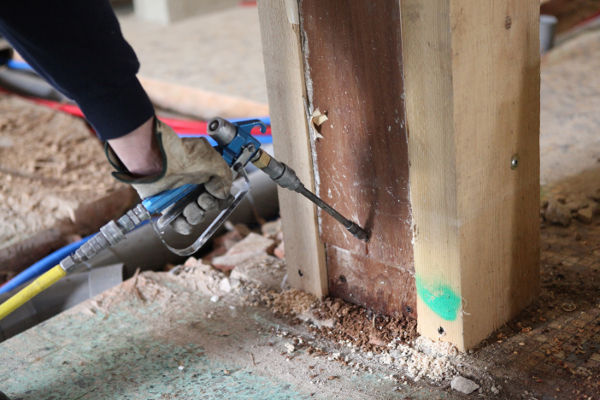

<p style="text-align: justify">Few pests can match the economical trauma that termites can do to a home. It’s a commonly known fact these buggers eat wood, a fact made all the worse when noting that they live in large colonies and reproduce rapidly. All of this considered, it&#8217;s no surprise that this serious pest has the ability to kick people out of their homes. However vile the creatures may be though, they can be dealt with. The key is to act quickly by learning to recognize a termite and then moving to exterminate them before they successfully nest down.</p>
<h2 style="text-align: justify"><strong>Recognizing a Termite</strong></h2>
<p style="text-align: justify">Termites in many ways resemble ants. This applies not only to their physical appearance but also their infestation behaviors. Termites are small, light brown creatures that have a notably large pincer on their heads. Termites are often flying creatures, with pale brown wings running the length of their body. They nest primarily underground, occasionally building their nest upward so that they protrude from the ground in a structure called a mound. Once established, nesting termites are very difficult to get rid of. This is in part due to their territorial and diverse social structures. Like ants, termites continuously work to protect a queen and thrive on their unwavering need to find and deliver food back to the nest. This would probably be fine, if their food was not our homes.</p>
<h2 style="text-align: justify"><strong>Termites in the Home</strong></h2>
<p style="text-align: justify">As a destructive pest, termites have been known to feed on wooden furniture and building structures. Termite damage will often come on quickly to home owners, as the pests will build mounds inside of walls and often work their way outward, destroying as they go. This will allow them to keep their presence virtually undetectable until severe, and often costly, damage has been done. Even worse, termites actually prefer the taste of aged wood, meaning they often focus on antiques first.</p>
<p style="text-align: justify">Termites have also been reported to eat not only wood, but also carpet and clothing if given the opportunity. This means they will also often infest closets and cupboards in their quest for food. Pay close attention to any damage to outside furniture or structures (for example porches and decks) or any nearby woodpiles. These will often show the first signs of termites.</p>
<h2 style="text-align: justify"><strong>Getting Rid of Termites</strong></h2>
<p style="text-align: justify">While it may not be simple, it is certainly possible to rid a home of termites. The task starts the moment you recognize the pest is in your home, waiting will only allow them to continue to breed and eat. To get a true gauge of the situation, contact an exterminator. If the colony has established inside the wall, the odds are they have already done at least minor damage to the structure. Fortunately, there are several ways to recognize a termite invasion. Seeing multiple flying insects inside of your garden will often indicate termites either planning to move inside or that they already have. Termites will also often build tubes (small structures on the wall with an opening near the end for the bugs to enter and exit from), an increase in the amount of paint chipping in your walls, or if you notice a hollow sound when knocking on your furniture or walls. All of these are signs of a possible termite invasion.</p>
<p style="text-align: justify">If you catch a termite invasion early, there are several steps that can be taken without the cost of an exterminator.</p>
<p style="text-align: justify">Common insecticides can often destroy a small termite colony. Even more, baiting works well with termites as they will often bring gathered food deep into the colony. Also, finding and destroying or removing food sources or deteriorating living conditions may work. However, termites are stubborn once they have nested. This can be done by removing all excess moisture from your home, this will stop wood from rotting and make the termite&#8217;s food far more undesirable.</p>
<p style="text-align: justify">However, if you suspect your situation is any farther along than simply the initial infestation, be sure to contact a professional exterminator. They can often advise you on the best course of action.</p>
<p style="text-align: justify">Pete Kontakos enjoys discussing natural pest control, wrestling and health online.</p>

Can You Remove Termites Without Moving Out?