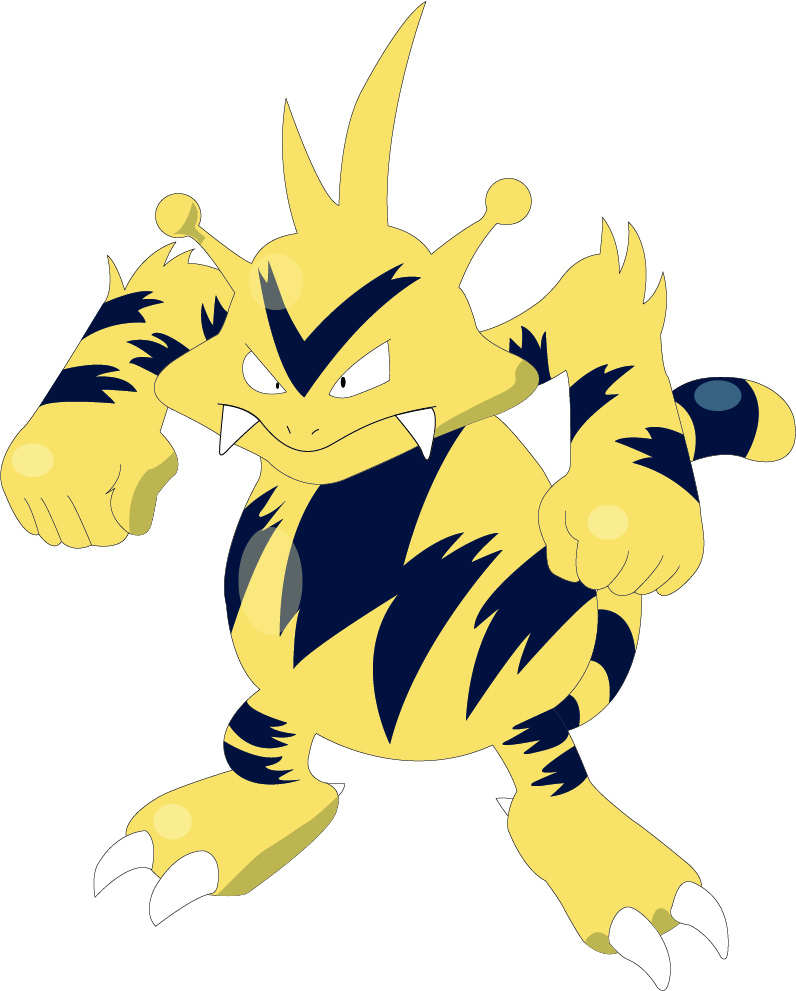

<p style="text-align: justify;">The name &#8216;Pokémon&#8217; translates to &#8216;pocket monster.&#8217; Introduced as a video game by Nintendo in 1996, Pokémon is now one of the most popular gaming franchises in the world. From the original video game, the Pokémon concept branched out into trading cards, an animated TV series, books, toys, and other media. Since its inception, the video games alone have sold over 200 million units. A number of factors contributed to the early and continued popularity of Pokémon.</p>
<h3 style="text-align: justify;"><b>Content</b></h3>
<p style="text-align: justify;">Pokémon appeals to children because they can capture monsters, which they train as pets. Pokémon are creatures who live in the wild and cannot speak except to say their name. Each creature has innate abilities and weaknesses. When you catch and train a Pokémon, it becomes stronger and more experienced. Despite the fact that Pokémon battle each other, none become maimed or die, so the game is combative but not graphically violent.</p>
<p style="text-align: justify;">The objective is to collect and train as many Pokémon as possible. One reason for the game&#8217;s popularity and success is its continual expansion. After the original 151 Pokémon creatures were introduced, more and more were added until now there are over 700 Pokémon. After the original red, green and blue games, the franchise periodically added more versions, including gold, silver, crystal, ruby, sapphire, emerald, diamond, pearl, platinum, black, and white. Because new creatures are added in every game incarnation, the ultimate goal of catching and training them all is ultimately unattainable.</p>
<h3 style="text-align: justify;"><b>Marketing</b></h3>
<p style="text-align: justify;">Though the Pokémon game was originally very successful in Japan, it was initially thought to be a hard sell in the United States due to its mild action and oriental nature. Producers countered this perception by very carefully translating the names of each of the creatures into English, altering dialog, and repackaging the games. Pokémon in the United States was marketed as a universe and as a cultural phenomenon of mixed media. Nintendo spent millions of dollars advertising the video game, the TV show, and other related media and products. Boys between the ages of 6 and 14 were particularly targeted as potential customers, although parents were also targeted as buyers of spin-off products. The campaign was a resounding success: Pokémon became the fastest-selling game in the history of Nintendo.</p>
<h3 style="text-align: justify;"><b>Media</b></h3>
<p style="text-align: justify;">Part of the reason for Pokémon&#8217;s success is its multi-media platform. The video games, the TV show, the trading cards, and related products all promote each other. The TV series, which featured a trainer and his Pokémon wandering through adventures in exotic locales, spawned 15 movies. After its debut in 1998 in the United States, it quickly became the top-rated children&#8217;s TV series. It was Americanized by eliminating all Japanese characters and the editing was sped up to account for American children&#8217;s shorter attention spans. A new music score and theme songs were also added.</p>
<h3 style="text-align: justify;"><b>Collectibles</b></h3>
<p style="text-align: justify;">One of the most popular aspects of the Pokémon phenomenon was the trading card game developed by Wizards of the Coast released in 1999. It immediately became a huge hit. New cards were continually released, some of which were rare and highly sought after. Toymaker Hasbro could not distribute collectibles quickly enough to keep up with demand. Collecting Pokémon products became many children&#8217;s favorite hobby.</p>
<p style="text-align: justify;">Pokémon owes its early success in the United States to an intensive marketing campaign and the fact that it diversified the Pokémon universe into a number of media. Pokémon continues to be one of the world&#8217;s leading game franchises.</p>
<p style="text-align: justify;"><strong>Byline</strong></p>
<p style="text-align: justify;">Terrence O’Brien writes on MTG, CCGs from card kingdom, board games, video games, anime, strategy games, geek conventions and other like topics.</p>
<p style="text-align: justify;">Image credit goes to fernando leal7.</p>

What Makes Pokémon So Popular?