
<p style="text-align: justify;">We all know that things often take a long time to navigate the complex and convoluted system of government bureaucracy, but five years seems a bit excessive. That’s how long Americans on both sides of the Keystone pipeline project debate have been waiting to hear the final word from the president.</p>
<p style="text-align: justify;">On September 19, 2008 TransCanada submitted an application to the United States Department of State regarding the proposed construction of a Keystone XL pipeline which would serve as an extension of the pre-existing pipeline. TransCanada completed the required Environmental Impact Statement and agreed to make specific revisions and conditions according to specifications from the Department of State. The Keystone project was approved by the U.S. House of Representatives on July 26, 2011 and was passed on to President Obama. However, he announced in November that a final decision would not be made concerning the project until after the elections. In January of 2012, he formally rejected the project proposal.</p>
<p style="text-align: justify;">Since then, TransCanada has submitted a new, revised version of the Keystone project and both advocates and critics have been waiting to hear whether the project will finally gain its long sought-after approval.</p>
<h3 style="text-align: justify;"><strong>What Exactly Does the Keystone Project Seek to Achieve?</strong></h3>
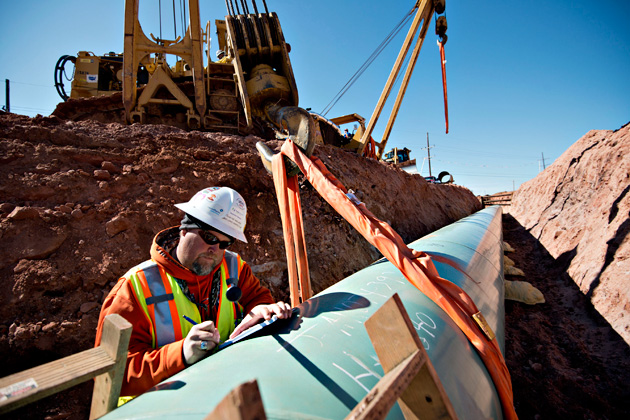
<p style="text-align: justify;">The purpose of both the pre-existing and proposed Keystone pipelines are to provide a practical and efficient route of transportation for synthetic crude oil derived from Canadian oil sands as well as crude oil from America’s northern states. This oil is collected and channeled all the way down south to Texas and the Gulf of Mexico for refining. TransCanada already has around 2,150 miles of Keystone pipeline in place but the proposed pipeline addition (referred to as Keystone XL Pipeline) would extend 1,179 miles from Hardsity, Alberta to Steele City, Nebraska.</p>
<h3 style="text-align: justify;"><strong>What the Proponents Say</strong></h3>
<p style="text-align: justify;">Those advocating for the new pipeline argue that the Keystone XL project will effectively create new jobs (especially temporary construction jobs) as well as ensure a bright and secure energy future for the nation. TransCanada Corporation has published articles online expressing their dismay that the president has thus far failed to approve the pipeline even though similar pipelines had received approval in the past.</p>
<p style="text-align: justify;">One such article read, “If [the Obama administration] had followed the same regulatory process, Keystone XL would now be up and running, supplying America’s largest refineries on the Gulf Coast with a secure supply of lower-cost oil from producers in Western Canada and the US Bakken region”. They went on to claim that the pipeline project would generate more than 9,000 jobs and $5 billion in investments.</p>
<h3 style="text-align: justify;"><strong>What the Critics Say</strong></h3>
<p style="text-align: justify;">But there has been a strong and consistent cry of disagreement from critics – primarily environmental advocates – who are concerned that the pipeline would cause widespread and potentially dangerous damage to the surrounding environment.</p>
<h3 style="text-align: justify;"><strong>So Will the Government Allow It?</strong></h3>
<p style="text-align: justify;">That’s the question on everyone’s mind as we’ve seen the five year anniversary of the proposal come and go earlier this month. And honestly, the answer is still unclear. NationalJournal writer Amy Harder has predicted that the proposal will finally get approval sometime around December. According to the U.S. Department of State’s webpage devoted to the Keystone XL Project, “The Department continues to review the Presidential Permit application for the proposed Keystone XL pipeline in a rigorous, transparent, and efficient manner”. We can only hope that they won’t leave us waiting another five years.</p>
<p style="text-align: justify;">Written by Jeremy Thelin of Industrial Matting, LLC., a company which provides matting solutions to jobsites and industries across the world.</p>

The Keystone Project: Will The U.S. Government Allow It?