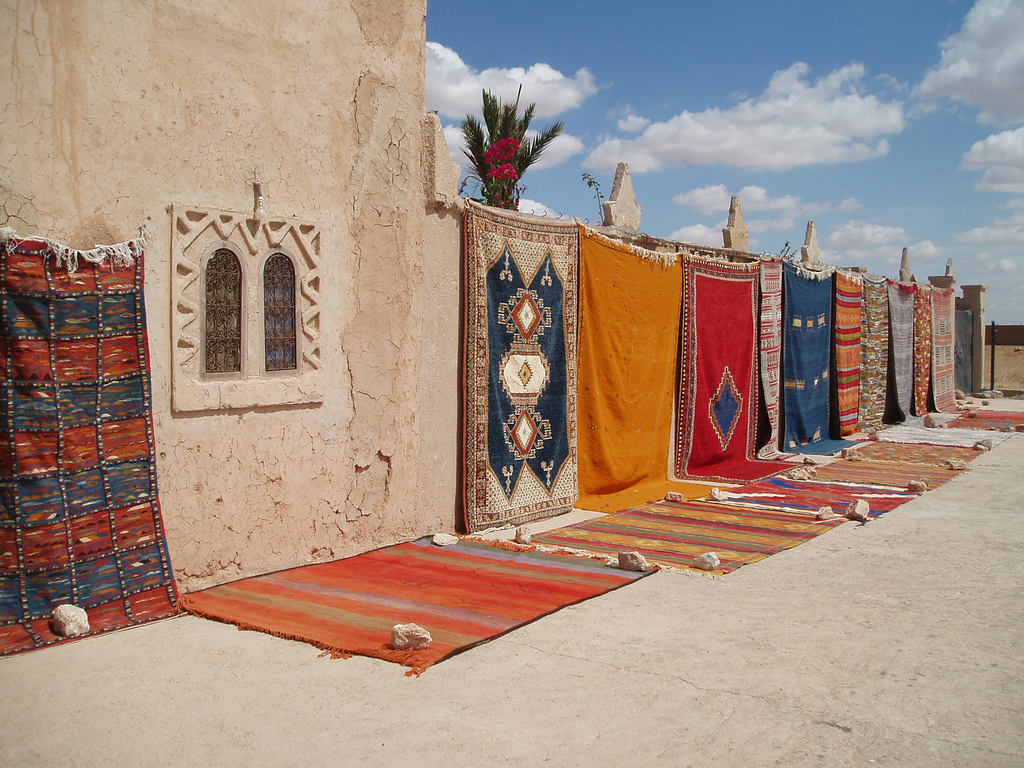

<p>Rugs have the ability to transform a room or hallway.<br />
They can hide unsightly stains or blemishes, help to highlight certain colours or shapes in a room or make it appear cosier, or lighter &#8211; or simply more interesting.<br />
Rugs are, of course, functional in many cases, helping to keep feet warm, particularly when they are placed over wooden or tiled flooring.<br />
But while they will protect floors from getting dirty and tired-looking, don’t forget the artistic value of a rug.<br />
Choosing the right rug will ensure that overall, a room is well balanced.<br />
This is of upmost importance if you want to make the most of you interior spaces. Consider the following when picking a rug:</p>
<h2>Floor Area</h2>
<p>The first question you should ask yourself when it’s time to pick a rug is where are you going to put it, and why? Is it for your bedroom, to make it cosier?<br />
Or will the rug protect your pristine, white hallway from the dirty shoes of a horde of visitors? Next, measure the area.<br />
This sounds obvious but it’s essential. You don’t want to purchase a rug that’s too large or too small for the space.<br />
Do this early on in the process, so you won’t be tempted to purchase something that is not quite right before you know exactly what you are looking for.<br />
Remember, in a large room the right rugcan be the focal point,<br />
while it’s worth considering the option of creating two separate areas with two separate rugs, in a particularly large room, for instance.</p>
<h2>Shape</h2>
<p>Think carefully about what shape you want your rug to be. A circular rug can create elegance and soften a square room.<br />
Just don’t go against the shape of other focal aspects in the room.<br />
So, a circular rug in a square room that also has a square dining table as its central focus is not advisable.</p>
<h2>Material</h2>
<p>Once you know the size and shape your rug should be, now you can choose the material it should be made of.<br />
Consider the level of foot traffic when choosing a textile type – if you want your rug to last, it should be durable and hardwearing enough to withstand being trampled on.<br />
Materials to consider include wool, synthetic or shag pile, or you may wish to choose a natural, eco-friendly material such as seagrass or hemp.<br />
Dhurries and kilims are two types of flat woven rugs, made of wool or cotton which are usually handily reversible.</p>
<h2>Colour</h2>
<p>Colour is very important when choosing a rug and can make such a difference to a room.<br />
Some interior designers say that when starting to decorate a room from scratch, a rug should be chosen first and other colours and furnishings can be worked in around it.<br />
Dark colours generally create warmth while lighter colours can open up a space. Patterns on a small rug, particularly bold ones, make a room look larger.<br />
But if you choose a rug with a design, pattern or motif, remember you must be able to see the whole design – so no covering it up with furniture.<br />
If your bed coverings are very busy and colourful then a neutral colour may be the best choice while a plain sofa will be offset nicely by a bold, patterned rug.</p>
<h5>Featured images:</h5>
<p><span class="license">License: Royalty Free or iStock</span><br />
<span class="source">source: http://www.flickr.com/photos/tigertwo/2361049911/</span><br />
Melanie is passionate about interior design and furniture.<br />
Over the last couple of years, she has enjoyed sharing her thoughts online.</p>

The Essential Guide To Picking The Right Rug For Your Interiors