
<p>Renewable energy has faced some rather bizarre criticisms over the past few years, with critics taking aim at everything from supposed inefficiencies to negative health effects. These criticisms have resulted in a negative atmosphere surrounding the technology, despite the fact that many of these claims are either outdated or were never true to begin with. Let&#8217;s explore some of the more widely circulated of these myths by stating five facts about renewable energy and the reasons why the myths can be safely discounted.<br />
 ;<br />
<strong>1. Renewable energy sources have no proven negative health effects</strong><br />
 ;<br />
One of the more unusual claims levelled at alternative energy sources has been its deleterious effects on public health. Wind power has been on the receiving end of most of this negative backlash, with reports of the so-called “Wind Turbine Syndrome” abounding in various localities. This “disease” supposedly carries symptoms such as nausea and migraines. However, no study has ever proved a link between proximity to wind farms and these symptoms, and no medical authority has ever formally recognised wind farms as causing negative health effects. Indeed, a recent Australian study has suggested that reports of the condition may actually be linked to attempts by anti-renewables campaigners to sabotage particular farms. So if you live near one of these installations, you can probably sleep easy (especially since reports of noise pollution are also often wildly exaggerated).<br />
 ;<br />
<strong>2. Utilising renewable energy can actually save you money rather than causing you to lose money</strong><br />
 ;<br />
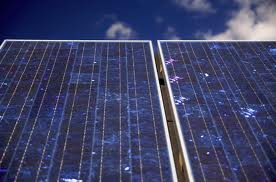
One of the most persistent cases made against renewable energy is that it is costly and inefficient, and that switching from more conventional sources will come with a hefty and ongoing fee. While this may once have been true, in 2013 choosing to switch to alternative energy sources could prove extremely profitable. The most accessible renewable power source on the domestic level is solar, and purchasing solar panels for homes can produce a huge reduction in your monthly overheads, as many companies will allow you to pay for your new system on the same basis as a monthly utility bill. And as oil and coal prices continue to rise inexorably, your savings will only increase year-on-year. As time goes on, preinstalled solar generation facilities may even push up the value of your home as adoption becomes more widespread.<br />
 ;<br />
<strong>3. Renewable energy is no less reliable than conventional sources of energy</strong><br />
 ;<br />
In fact, when you sit down and think about it, renewable energy can actually be <em>more</em> reliable. There is no shortage in the world of sun, wind, rain, geothermal heat, and waves (the principle sources for renewable power), while conventional energy sources are dependent on notoriously finite substances. While there is no danger of fossil fuels or uranium drying up in the near future, disruptions in supply lines or infrastructure can leave them as vulnerable to the whim of the gods as any other utilities (as has been proven internationally with disasters such as the Fukushima incident and the recent conflicts in oil-rich nations). The seemingly reasonable contention that sunshine and wind are not constant can be offset simply by diversifying the sources used; geothermal heat never goes away, and solar energy can be supplemented by wind power in sub-optimal conditions, and vice versa, with other sources filling in the gaps.<br />
 ;<br />
<strong>4. Renewable energy can actually be much more efficient than conventional sources of energy</strong><br />
 ;<br />
It has often been claimed that renewables lag far behind conventional sources in terms of their overall efficiency, and while this may have been true in past years, it is most decidedly becoming a problem of the past. Oft-quoted figures of “30 percent efficiency” in terms of conversion of raw solar energy into usable electricity, while accurate, are obfuscating and likely to produce information bias; per kilowatt hour, both solar energy and wind energy have a comparable cost to fossil sources as of 2005, with a range of between 0.3 and 0.5 US dollars per kWh being reported, depending on the expected lifespans of installations, and the concentration of solar radiation and wind levels experienced in different areas.<br />
 ;<br />
Renewable energy is here to stay, and will inevitably play an increasingly important role in international energy production in coming years. By realising that many of the claims being made to attack its adoption are either outdated or accidentally or deliberately misleading, you could stand to save a considerable amount of money by adopting early – with the added bonus of helping to save the planet in the process.</p>

Renewable Energy: Dispelling Some Myths