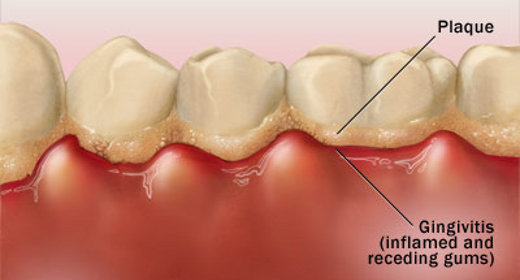

<p>If you suffer from gums that bleed occasionally after brushing, you may suffer from a type of gum disease known as gingivitis. While most people eventually develop gingivitis, the disease shouldn’t be overlooked, even if symptoms are fairly mild. In order to keep your teeth and gums healthy, and to prevent gingivitis from developing into the more serious periodontitis, you need to treat the disease early on before it can cause tooth loss. Fortunately, treating gingivitis during the disease’s early stages is fairly simple when practicing proper oral hygiene.<br />
<strong>Causes of Gingivitis </strong><br />
If you fail to practice quality oral hygiene, such as brushing and flossing daily, you allow naturally occurring bacteria that grow in the mouth to form into plaque, a sticky film that gathers around the base of your teeth. Whenever you eat, plaque releases a substance that can cause permanent damage to the health of your teeth’s enamel. When allowed to buildup, plaque turns into tartar, a harden bacteria that develops along the gum line that makes properly brushing your teeth and gums more difficult. Eventually the combination of tartar and plaque deposits in the mouth cause your gums to become inflamed, which leads to the development of gingivitis.<br />
<strong>Symptoms of Gingivitis</strong><br />
If you don’t regularly brush and floss, odds are you experience frequent symptoms of gingivitis, even if you don’t notice at first. However, the later stages of gingivitis have several noticeable symptoms that include:</p>
<ul>
<li>Purplish, red, or swollen gums. When healthy, your gums should appear bright pink and firm</li>
<li>Your gums bleed easily after brushing or flossing. You may notice blood in your toothpaste when spit out or blood along the gum lines after flossing.</li>
<li>Tender gums that are sensitive to the touch</li>
<li>Sores that develop along the gum line</li>
</ul>
<p>If you suspect that you might suffer from gingivitis, start by examining your oral health habits to determine if they could be improved. If you only brush once a day, frequently forget to floss, and tend to consume high amounts of sugar as part of your diet, the symptoms you’re experiencing most likely means you have developed gingivitis.<br />
As a general rule, if you think you could improve upon your oral hygiene habits, your daily routines need tweaking.<br />
<strong>Preventing Gum Disease </strong><br />
Healthy teeth and gums go a long way to helping you enjoy a lifetime of quality oral health. If you elect to neglect your oral health now, you’ll suffer the consequence later in life when decay and gum disease have caused permanent tooth loss. Fortunately, you can help prevent gum disease by taking the following steps as recommended by the American Dental Association.</p>
<ol>
<li><strong>Brush twice a day for at least two minutes at a time</strong>. While brushing remains one of the most effective ways of preventing gum disease, many people simply don’t brush for long enough to properly clean their teeth and gums. Even though the ADA recommends people brush for two minutes each session, studies have found that most people only brush for an average of 30 seconds. So even if they brush twice a day, they are still only brushing for a quarter of the time recommended.</li>
<li><strong>Floss daily</strong>. Not occasionally or on most days, to enjoy the best oral health possible you need to floss everyday. The best time to floss is at night right before brushing your teeth at bedtime. This will help remove harmful plaque and any lingering food particles from in-between your teeth. If you don’t think flossing important, consider that the majority of cavities form between the teeth.</li>
<li><strong>Schedule regular dental appointments</strong>. When caught early, a dentist can easily treat gingivitis. However, when left untreated, gingivitis can quickly develop into periodontitis, a more serious form of the disease that directly leads to tooth loss. To enjoy optimal protection, schedule appointments at least once every six months.</li>
<li><strong>Limit sugar consumption</strong>. Plaque feeds of the sugars you eat to produce enamel damaging materials. The less sugar, especially processed and added sugar, you consume as part of your diet, the healthier your teeth and gums will remain.</li>
</ol>
<p>A freelance writer, Timothy Lemke learned about the dangers of gingivitis from Dr. Timothy Harbolt, a dentist in Salem, Oregon.</p>

Keep A Healthy Smile By Avoiding Gingivitis