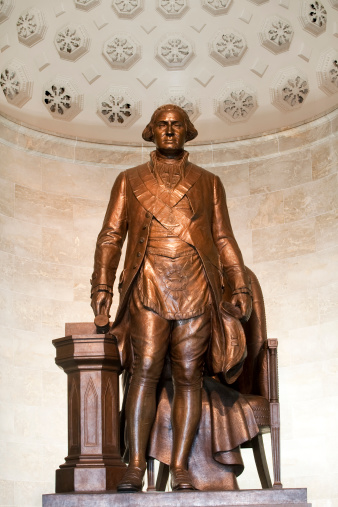

<p style="text-align: justify;">Freemasons- their complete history and affiliations are shrouded in secrecy and for some, even suspicion. The role they played in the formation of America is debated to this day. Some believe that Freemasons were social and political activists who consciously worked to influence America’s political evolution on every level, while others consider their group affiliations to be coincidental and separate from any political activity.</p>
<p style="text-align: justify;">One thing that cannot be denied is the presence of Freemasons at every turn in America’s development. Whether or not their social and political placement was strategic on their part may be open to debate, however their influence cannot be denied. A few examples of their influence on the formation of America include:</p>
<p style="text-align: justify;">&#8211; There are a number of known Masons who were signers of the United States Constitution, including Benjamin Franklin, George Washington, John Blair, and Gunning Bedford, Jr.</p>
<p style="text-align: justify;">&#8211; The Green Dragon Tavern, also called “The Headquarters of the Revolution” and “The Freemasons’ Arms” is where the Boston Tea Party was planned.</p>
<p style="text-align: justify;">&#8211; Robert Livingston, who was the Grand Master of New York&#8217;s Masonic Lodge, swore in George Washington as the first President of the United States. The oath was taken on a Bible from Mr. Livingston’s Masonic lodge aka The Grand Lodge of New York.</p>
<h3 style="text-align: justify;"><b>Freemason Origins in America</b></h3>
<p style="text-align: justify;">The first official Freemason lodge charter was granted in 1733 by Henry Price, who was the “Provincial Grand Master over all of North America for the Grand Lodge of England”. The formation of that lodge seemed to some to have been a catalyst for the emergence of what can be described as a Freemason movement. Between 1733 and 1737 Provincial Grand Lodges sprang up in New York, South Carolina, Massachusetts, and Pennsylvania.</p>
<p style="text-align: justify;">While the first official lodge may have been granted charter in 1733, Freemasons had been active for years in America. For example, in the December 8, 1730 edition of the Pennsylvania Gazette, Benjamin Franklin wrote about several freemason lodges that already maintained a presence in the area. Additionally, the current Grand Lodge of Philadelphia has a handwritten copy of an important document called the Carmick manuscript, which listed the charges, or duties, of each member. The historical significance of this document is that it was written in 1927, a full six years before the first official lodge was essentially sanctioned in America.</p>
<p style="text-align: justify;">So much is unknown about the history and activity of Masons in America and, it appears that Masons wanted it to be kept that way. There is speculation that some Masons killed to keep their secrets from getting out. In 1826, a man named William Morgan disappeared, and was allegedly kidnapped and killed by a group of Masons. Mr. Morgan had threatened to publish a book that would expose the secrets of Freemasonry. Not enough proof was found to make a conviction, but Mr. Mason’s death prompted a backlash against the Masons, which continued into the mid-1830’s.</p>
<p style="text-align: justify;">Eventually, the influence of the Masons again gained steam, and by the outbreak of the Civil War in 1861, lodge membership had grown from 66,000 members to 200,000 members, and there were over 5,000 lodges in America. Even though they had always been involved in the evolution of America’s political system, the political influence of the Masons grew right along with their numbers. Of course, the debate about whether their influence was planned or was merely happenstance will likely continue for as long as America’s history is written.</p>

Freemasons and The Formation Of America