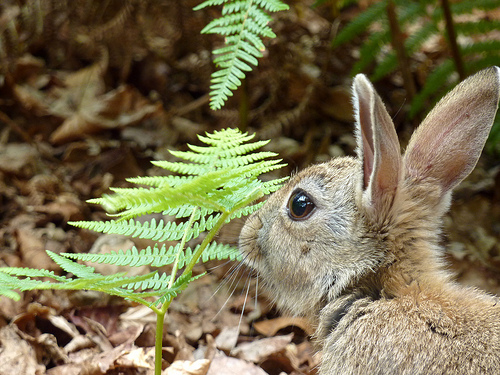

<p>When it comes to reproducing, mites put rabbits to shame. In warmer climates or protected places like greenhouses, a new generation can appear every three to seven days all year-round. In colder regions, rust mites start settling in for the winter by late August. Eggs, nymphs and adults spend the chilly season at the base of the buds or in cracks in the bark, then move into developing buds in the spring.<br />
Like their fellow mites, rust mites are not insects.; they’re actually close relatives of spiders. Even compared with others of their kind, they’re tiny – less than 1/100 inch long – so you’ll never spot them without a strong magnifying glass. You can’t miss the work they do, though. The itty-bitty monsters burrow into the undersides of leaves, stems, and flower buds to suck out the life-giving juices. As the same time, they inject a toxin that discolors the tissue. Generally, the first symptoms you see will be on the leaves: On deciduous shrubs and broad-leaved evergreens, afflicted foliage takes on a russet or bronze color; on conifers, the needles turn color and drop off. Eventually, leaves, stems and buds dry out and turn brown, and webbing may appear between various plant parts. If a massive invasion goes unchecked long enough, the plant weakens and may even die.<br />
Rust mite damage is usually most severe during mild weather. That’s because when a heat wave strikes, rust mites lose some of their taste for socializing, and as a result, the populations decline a little.<br />
When weather is to their liking, rust mites multiply with the speed of lightening, which means that a small problem can turn into a big one in the blink of an eye. So when you spot trouble, don’t put a mite control on your to-do-list. Get it done NOW!<br />
First, because early mite damage can masquerade as disease or culture problems, make sure that you really do have these multi-legged marauders in your midst. Just hold a sheet of white paper under a branch and jostle the foliage. Then look at the paper. If it’s full of tiny yellow or tan specks and some of them are moving, your shrub is hosting a squad of rust mites.<br />
In the early stages, a good hard blast of water will generally end your rust mite woes. So grab your garden hose, take aim, and fire! Repeat the procedure for three days, and if you’re lucky, the mites will be history.<br />
If you’d rather spray once and be done with it, mix an 8-ounce bottle of white Elmer’s glue with two gallons of warm water into a hand-held sprayer, and spray all the twigs and leaves. The mites will be caught in the glue and when it dries, it will flake off, taking the dead mites with it.<br />
Mites might be teeny, but they can do BIG damage to shrubs as well as fruit trees. When these pests attack, you can protect your prize plants with this easy recipe:<br />
5lb. of white flour<br />
1pt. of buttermilk<br />
25 gal. of water<br />
Mix the ingredients together, and keep the portion in a tightly closed garbage can. Stir before each use, and spray weekly until the mites are history.<br />
Chad Downings is an expert in pest control home remedies. He currently runs his own company and offers free consultations for Pest Control Stamford in Connecticut.</p>

Another Pest Mite Bites The Dust