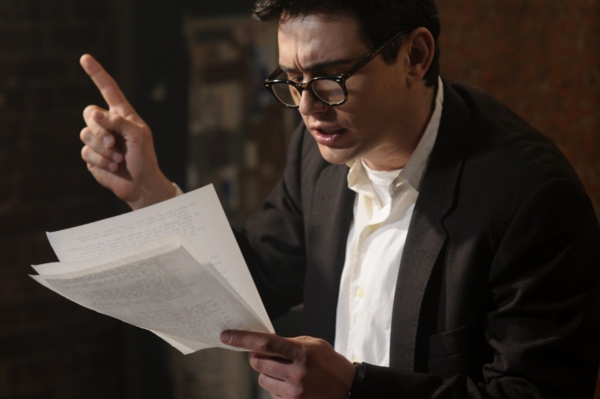

<p>As I am going through my English major and taking innumerable English classes, I have come to admire the work of poets and writers previous to me. In fact, my poetry and other written works have started to explore some of the techniques that were used years in the past.</p>
<h2>Beat Poetry</h2>
<p>Currently, I am enrolled in a class that teaches the Beats and the Confessionals. I have absolutely adored the class from day one. And, shortly after day one, we read the poet Allen Ginsberg. I could not help but be fascinated by his work because it is so far removed from the type of poetry I am used to reading. It defies expectations and challenges our personal readings of society.<br />
While I do admire Ginsberg’s poetry, I do not necessarily condone the types of things he did during his lifetime. I view the poems as separate entities from the poet, and, though the poet should maintain credit, they no longer have control over what their words do or say.</p>
<h2>Specific Poems</h2>
<p>While I really enjoyed picking apart “Howl” one section at a time, it was not my favorite of Ginsberg’s poems. I did, however, write an imitation of “Howl” with a poem called “Humanity is:”. It employed anaphora in a similar way as Ginsberg did and served to explore all the ugliness of society today. “Humanity is:” even came with a footnote called “Good Old Uncle Sam: You are My Father,” which was specifically an exploration of the damaging parts of the patriarchy.<br />
Like I said, I was intrigued by “Howl,” but there were others of Ginsberg’s poems that I enjoyed more. One such poem is “Sunflower Sutra,” which I spent four hours exploring deeply yesterday. “Sunflower Sutra” is set up like a visionary prophecy and uses the image of a dying sunflower to explore the depth of the damage American culture has done to the human population.</p>
<h2>Symbolism</h2>
<p>The poem is extremely symbolic, and, though Ginsberg admitted that he was high while he wrote it, it is still a valuable piece of literature that should be critically analyzed.<br />
One of the critical symbols in the piece is the locomotive. The sunflower was growing in a locomotive yard, and the locomotive, and its by-products (smoke, smog, etc.) are killing the sunflower. This symbolizes the American culture.<br />
In addition, the locomotive yard is chock full of scrap metal and various machine parts, which are all given human-like qualities in the piece. It is as if the effects of the locomotive have scattered humanity and made them into un-influential, inanimate objects.<br />
The scrap metal also shows exactly how uninhabitable the area is for the sunflower and explores the reasons why it is dying. Ginsberg also asks the sunflower when it forgot it was a flower, which is a poignant line because the sunflower is the symbol of a truth-seeking object because it follows the track of the sun, and the sun is symbolic of light and truth.<br />
Talking to the scrap metal locomotive yard, Ginsberg’s speaker gives a kind of sermon, saying that “we’re all golden sunflowers inside,” hoping that people will cast off the damage done by the culture and live a more perfect life.<br />
Though it is arguably egotistical to raise one’s self to a position of power, I think the speaker does a good enough job of setting up the vision of the sunflower in such a way that he almost deserves the authority he gives himself at the end.<br />
Anyway, I think that “Sunflower Sutra” is extremely meaningful and deserves a deep look if you have not experienced it before.<br />
By Kassandra Konecny</p>
<h3>Bio:</h3>
<p>Though Kassandra Konecny has only begun writing professionally about six months ago, she has been writing creatively for years. Recently, she has worked to become an expert at writing blogs about poetry and scrap metal recycling companies.</p>

Tribute To Allen Ginsberg As A Poet