
<p>The featured image is resourced from Flickr.<br />
The release of the Wii U (November 18 in the USA and November 30 in Europe) has excited one group of gamers and filled another group with concern. Speculation is rampant as to whether the lower graphics engine of the Wii U will be able to compete with the rival consoles by Sony and Microsoft, but everyone agrees that in this case it is not the graphics that matter. What makes the Wii U so fascinating – even to consumers who are not avid gamers – is the fact that it is essentially controlled through a tablet.<br />
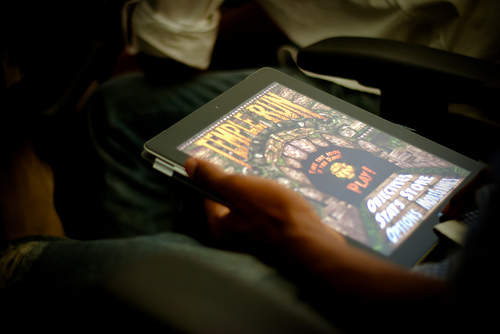
Tablets have been the great new contender in the industry of gaming, a field that had until recently been the exclusive of PCs and gaming consoles. They have provided not only a new platform for developers to release their games, but also a new concept of gaming itself – one which is harmonious with the tablet experience and which therefore proves difficult to reproduce on consoles or desktop computers.<br />
To clarify, it is not a matter of raw horsepower – obviously, a high-end PC is technically able to reproduce anything that can run on a tablet. The point is the different type of experience that is provided by the two platforms and by the different commercial service that corresponds to them. A brief comparison of this list of Xbox games with the gaming apps in these BlackBerry PlayBook reviews shows the latter being instantly more accessible to consumers in terms of price. They are also easier to obtain, in that you can download them right away rather than having to buy a disc support. In harmony with all of this, the games are actually easier to learn and to play, even if they are not always as long as games on gaming consoles.<br />
These arguments point to the fact that tablets have aimed their gaming experience at the fringe known as ‘casual gamers’. Smash hits such as <em>Angry Birds</em>, which is fundamentally a tablet game, reflect this aspiration. It is a return to an archetypal form of game, closer in structure and formula to the original, legendary <em>Tetris</em> than to the sprawling, movie-like adventure games that are more popular on consoles.<br />
The question of the future for this form of gaming is highly interesting. One of the strengths of tablets as a product lies in their ability to renew themselves while remaining accessible. While consoles need to change their hardware support and – often – their extensions like gaming keyboards and joysticks, tablets are able to evolve while preserving their original design (see this comparative BlackBerry PlayBook review, which looks at the differences in content and OS between two externally identical iterations of the PlayBook).<br />
So, while bringing casual gaming into the console world the way that Nintendo are doing with the Wii U may appear as something of a gamble (not necessarily a bad bet, as the Wii has been hugely profitable), the appeal of gaming in tablets remains firmly anchored in the machines that support them. As long as tablets remain popular, the type of casual, instant gaming that they promote cannot decay – because it is part of the greater experience provided by tablets themselves. For us critics, following the parallel evolution of the tablet infrastructure and their new concept of gaming will certainly be a fascinating privilege.</p>

The Future of Gaming for Tablets