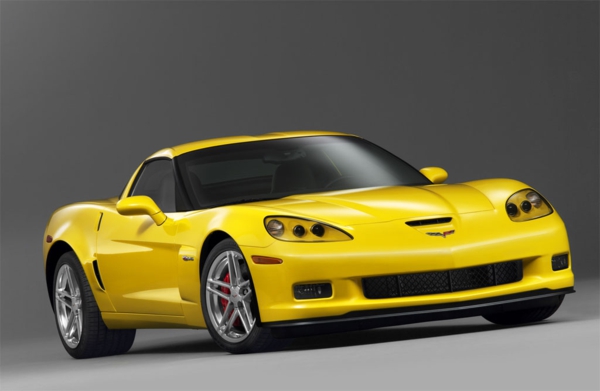

<p>It was 1953 when the first generation Chevrolet Corvette made its way into the automotive world. It was initially a concept car that was designed by a man named Harley Earl. The person responsible for the name was Myron Scott. He named the car after a small warship called the corvette, known for its ability to maneuver. It was initially manufactured in Flint, Michigan and then St. Louis, Missouri. It is now built in Bowling Green, Kentucky.<br />
<strong>First Generation 1953 &#8211; 1962</strong><br />
In 1953 only 300 Corvettes were manufactured. Each one was white with a roadster design that had a red interior. The first generation Corvettes only had a 150 horsepower 6 cylinder engine, and automatic transmission. It was considered a car for cruising rather than a sports car. The initial model year ended in 1962.<br />
<strong>Second Generation 1963 &#8211; 1967</strong><br />
In 1963 the second generation Corvette was recognized for being stylish and powerful. The Corvette Grand Sport became popular. The production of Corvettes increased to about 27,000 cars annually. The Corvette Sting Ray Coupe set the standard during this time for sports cars. It was designed by Bill Mitchell and sometimes called the “Mitchell Sting Ray.” A variety of engine options were created to meet demand.<br />
<strong>Third Generation 1968 &#8211; 1982</strong><br />
The third generation Corvette is the largest generation of any Corvettes ever manufactured. During the years 1953 to 2010 more than 1.5 million Corvettes were made, and out of this number, 540,000 were third generation Corvettes. Unfortunately emission standards led to a decrease in horsepower and its value to collectors.<br />
<strong>Fourth Generation 1983 &#8211; 1996</strong><br />
During the 1980s the world witnessed a newly designed Corvette. The fourth generation of Corvettes was available in 1984. It came with an electronic dashboard and the speedometer and tachometer were lit by a liquid crystal display. This was a standard feature on all fourth generation Corvettes. They were recognized for both their design and engine strength.<br />
<strong>Fifth Generation 1997 &#8211; 2004</strong><br />
The fifth generation Corvette took the lead in automotive performance. It was designed with the most advanced technology. GM entered the fifth generation Corvette in the American Le Mans Series.<br />
<strong><br />
Sixth Generation 2005 &#8211; 2010</strong><br />
The sixth and current generation of Corvette is designed with the latest technology and is able to compete at the upper levels of sports car performance. The ZR1 Corvettes can reach speeds of more than 200 MPH and are sold at retail for over $100,000.<br />
Since 2007 executives at GM have been working on the seventh generation of Corvettes. They were anticipated to be released during the 2011 model year, but it was delayed. Currently the fall of 2013 is scheduled to see the release of the seventh generation of Corvettes.<br />
The Corvette stands out among other cars in the history of the automobile. No other car has ever experienced over 57 continuous years of production.<br />
Melissa is a blogger for Corvette Mods. She serves as a Corvette enthusiast and loves to write all about the sixth and current generation of Corvettes.</p>

The Corvette Experience